
MSK Diagnostic Ultrasound in Liverpool
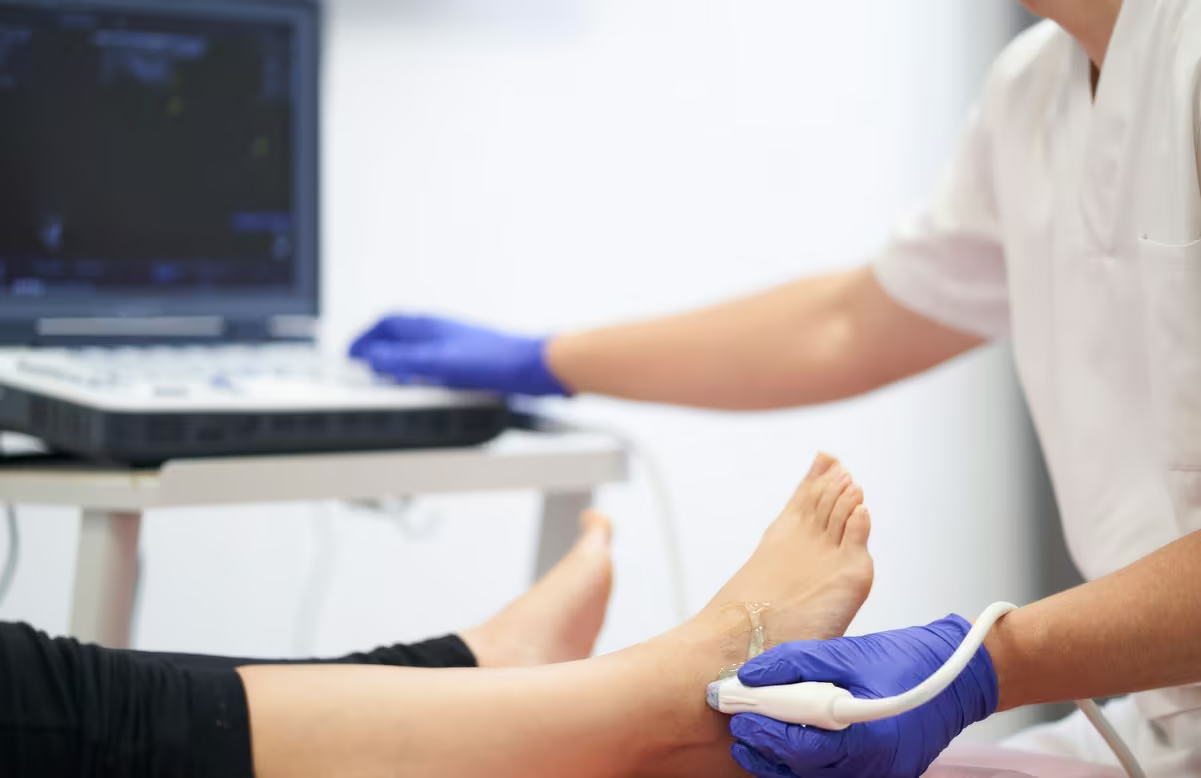
At Liverpool Central Physio, musculoskeletal diagnostic ultrasound is used to help understand the underlying cause of pain affecting muscles, tendons, ligaments and joints. Rather than relying solely on physical tests or symptoms, ultrasound imaging allows us to see how these soft tissues look and move in real time.
For many people, this provides clarity much sooner. Instead of waiting weeks or months for imaging through other pathways, a scan can often be performed during the same appointment as your clinical assessment. This allows us to discuss the findings together and explain what they may mean for your recovery.
Diagnostic ultrasound is widely used in musculoskeletal medicine because it is safe, non-invasive and does not involve radiation. The scan uses high-frequency sound waves to create detailed images of soft tissue structures beneath the skin. The process is quick and comfortable, and most scans take only a few minutes to complete.
For patients already receiving treatment, imaging can also support a more precise rehabilitation plan alongside physiotherapy treatment in Liverpool.
For many people, this provides clarity much sooner. Instead of waiting weeks or months for imaging through other pathways, a scan can often be performed during the same appointment as your clinical assessment. This allows us to discuss the findings together and explain what they may mean for your recovery.
Diagnostic ultrasound is widely used in musculoskeletal medicine because it is safe, non-invasive and does not involve radiation. The scan uses high-frequency sound waves to create detailed images of soft tissue structures beneath the skin. The process is quick and comfortable, and most scans take only a few minutes to complete.
For patients already receiving treatment, imaging can also support a more precise rehabilitation plan alongside physiotherapy treatment in Liverpool.
Why Ultrasound Can Help Guide Treatment
One of the biggest advantages of ultrasound imaging is the ability to see soft tissue structures while they are moving. This dynamic view can help confirm which structure is contributing to pain or restriction.
When the source of symptoms is clearer, treatment can be more targeted. Instead of relying on general rehabilitation exercises, therapy can focus on the exact tendon, muscle or joint structure that needs support. Many patients find that understanding what is happening inside their body reduces the uncertainty that often comes with ongoing pain.
Ultrasound findings are usually combined with a clinical assessment to guide the most appropriate treatment plan, which may include physiotherapy rehabilitation or structured recovery programmes.
When the source of symptoms is clearer, treatment can be more targeted. Instead of relying on general rehabilitation exercises, therapy can focus on the exact tendon, muscle or joint structure that needs support. Many patients find that understanding what is happening inside their body reduces the uncertainty that often comes with ongoing pain.
Ultrasound findings are usually combined with a clinical assessment to guide the most appropriate treatment plan, which may include physiotherapy rehabilitation or structured recovery programmes.

Conditions That Ultrasound Can Help Assess
Musculoskeletal ultrasound is commonly used to assess a range of soft tissue injuries.
The shoulder is one of the most frequently scanned areas, as ultrasound is particularly effective at identifying problems affecting the rotator cuff tendons or the shoulder bursa. These conditions are often associated with persistent shoulder pain and restricted movement.
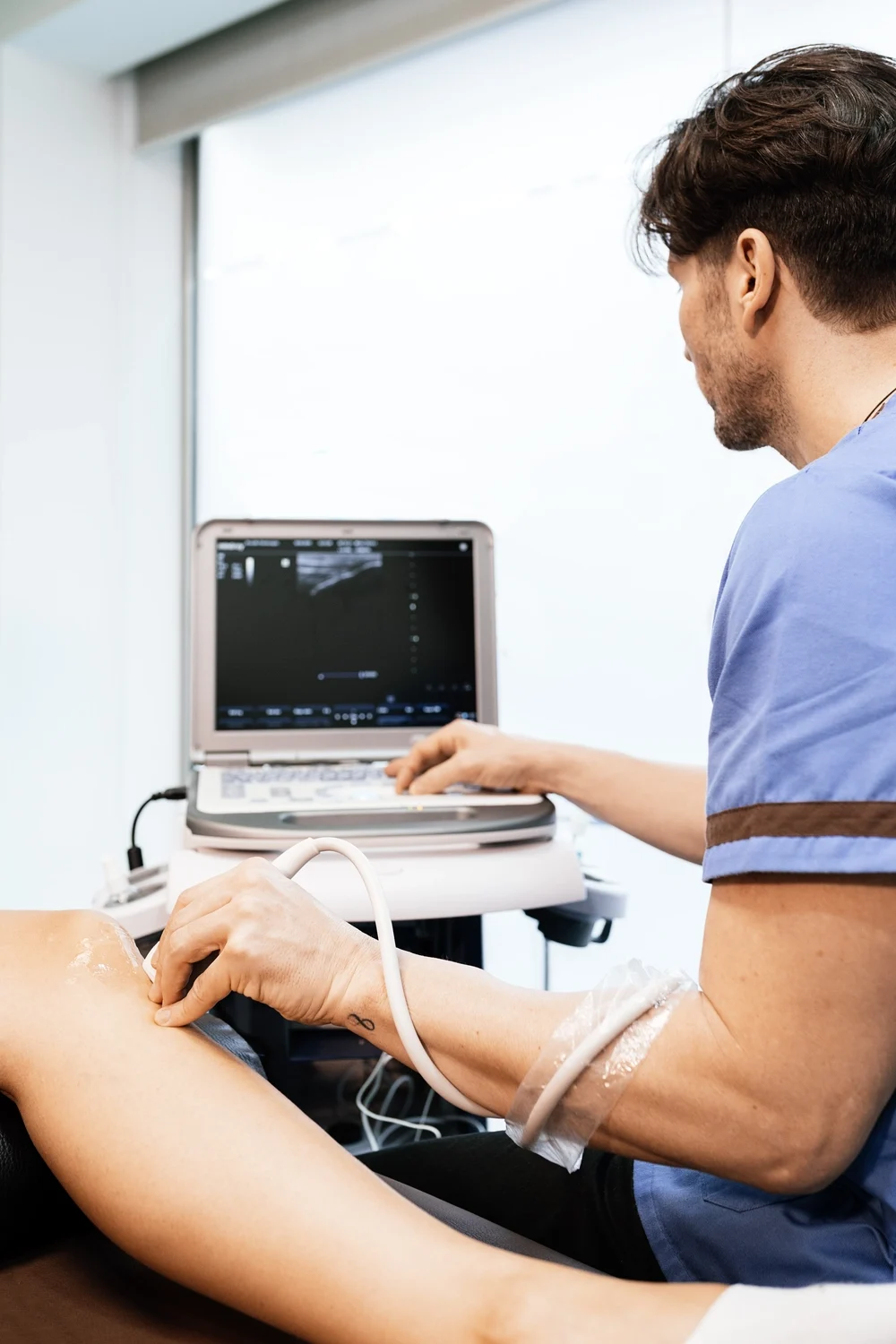
Ultrasound can also help investigate knee problems such as ligament irritation, patellar tendinopathy and inflammation around the joint. If knee symptoms are limiting your activity levels, you may find it helpful to read more about knee pain treatment in Liverpool.
Muscle injuries are another common reason for ultrasound assessment. Hamstring strains, calf injuries and other soft tissue problems related to sport can often be visualised quickly with imaging. This helps determine the severity of the injury and supports rehabilitation for patients recovering from sports injuries.
Ultrasound may also be used to investigate tendon problems affecting areas such as the elbow, hip, ankle or Achilles tendon. While imaging is only one part of a full clinical assessment, it can provide valuable additional information to guide treatment decisions.
The shoulder is one of the most frequently scanned areas, as ultrasound is particularly effective at identifying problems affecting the rotator cuff tendons or the shoulder bursa. These conditions are often associated with persistent shoulder pain and restricted movement.
Ultrasound can also help investigate knee problems such as ligament irritation, patellar tendinopathy and inflammation around the joint. If knee symptoms are limiting your activity levels, you may find it helpful to read more about knee pain treatment in Liverpool.
Muscle injuries are another common reason for ultrasound assessment. Hamstring strains, calf injuries and other soft tissue problems related to sport can often be visualised quickly with imaging. This helps determine the severity of the injury and supports rehabilitation for patients recovering from sports injuries.
Ultrasound may also be used to investigate tendon problems affecting areas such as the elbow, hip, ankle or Achilles tendon. While imaging is only one part of a full clinical assessment, it can provide valuable additional information to guide treatment decisions.
What to Expect During Your Ultrasound Appointment
Your appointment begins with a short discussion about your symptoms, medical history and any previous injuries. This helps identify the area that needs to be assessed and ensures the scan focuses on the structures most likely to be involved.
A brief physical assessment may then be carried out to understand how the affected joint or muscle is functioning. This allows the clinician to narrow down the possible causes of your symptoms before performing the scan.
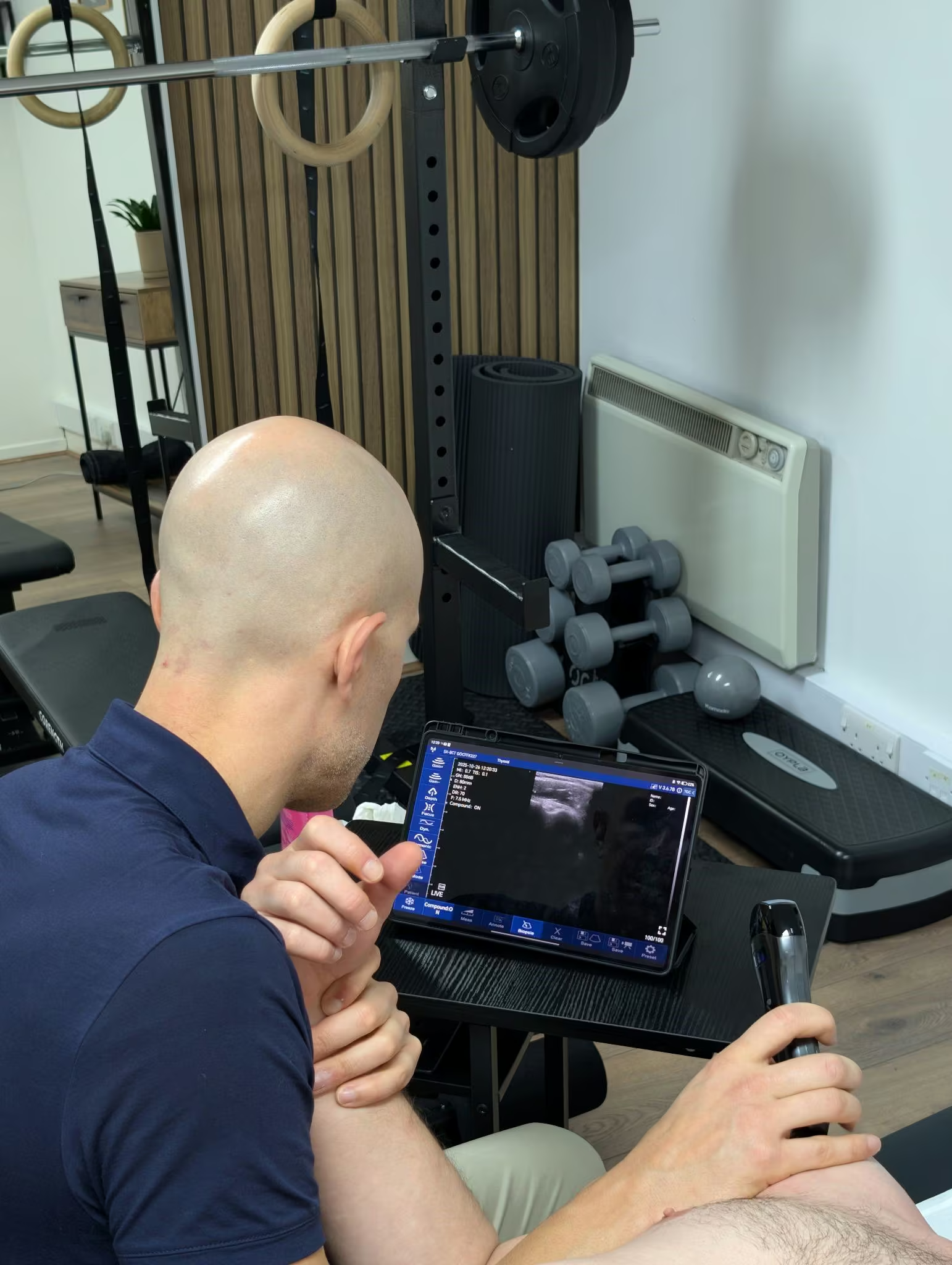
The ultrasound scan itself is performed by a HCPC registered clinician with experience in musculoskeletal assessment. At Liverpool Central Physio, scans are carried out by Jorge, who combines clinical examination with diagnostic imaging to build a clearer picture of what may be contributing to your pain. You can learn more about Jorge’s background and clinical experience on our About Us page.
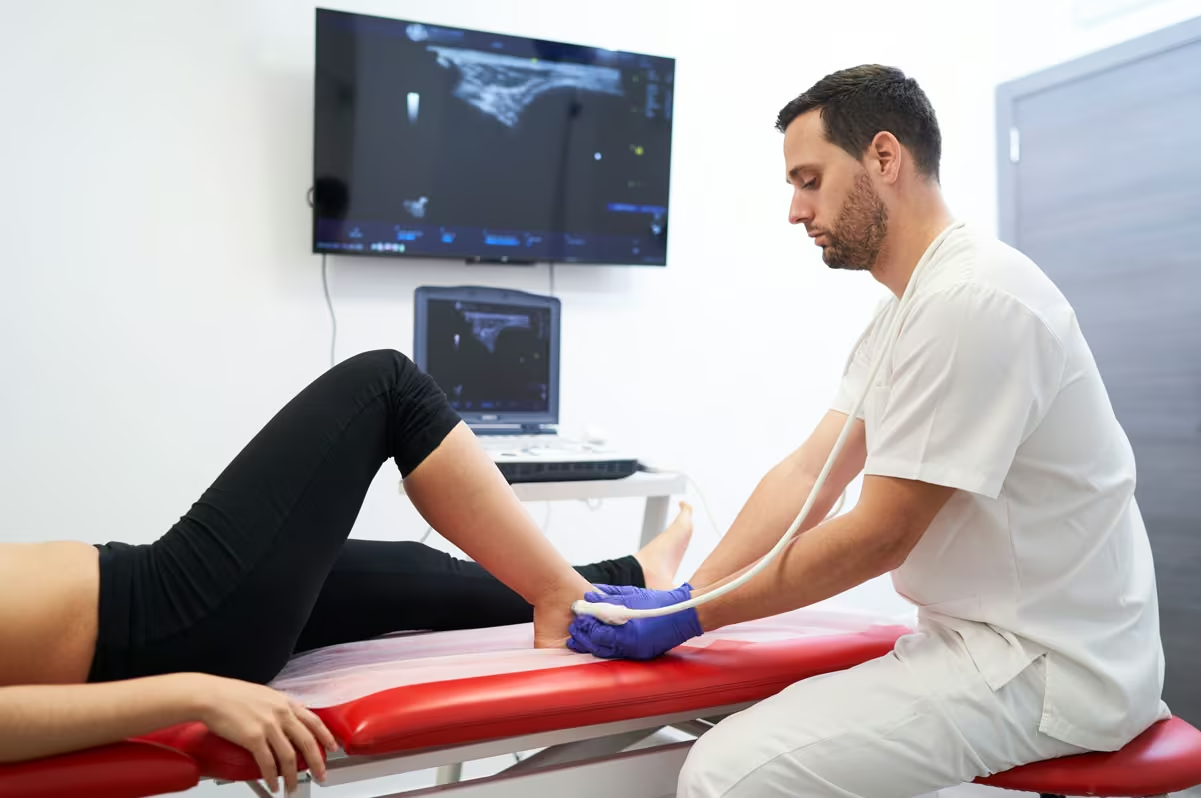
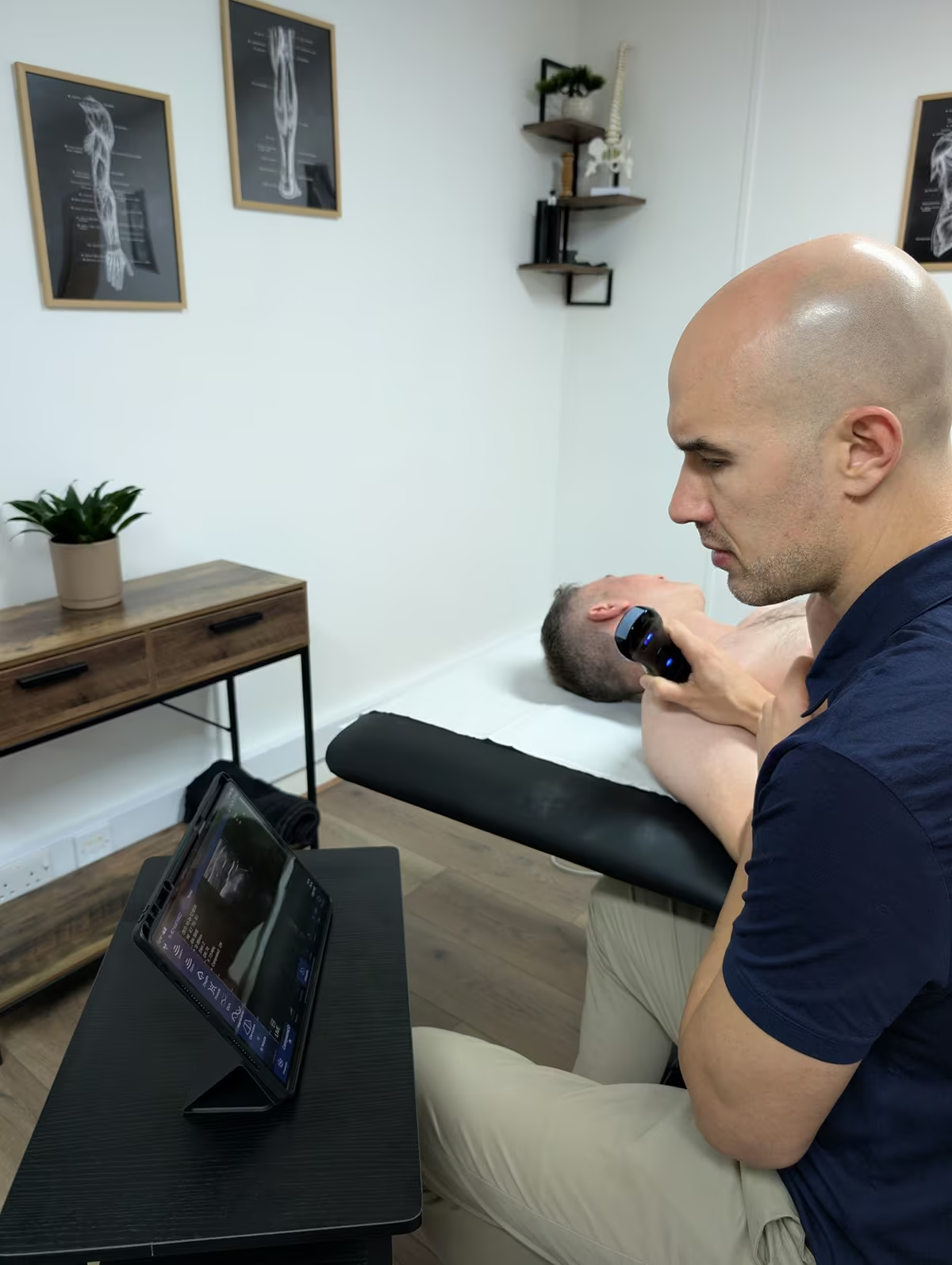
During the scan, a small handheld probe is moved across the skin with ultrasound gel applied to the area being examined. The gel helps transmit the sound waves so clear images can be produced. The process is painless and usually takes around ten to fifteen minutes depending on the area being assessed.
Because the images appear instantly on screen, the findings can be reviewed with you during the appointment. This allows time to explain what can be seen, what it may indicate for your symptoms, and whether further treatment or rehabilitation would be helpful.
A brief physical assessment may then be carried out to understand how the affected joint or muscle is functioning. This allows the clinician to narrow down the possible causes of your symptoms before performing the scan.
The ultrasound scan itself is performed by a HCPC registered clinician with experience in musculoskeletal assessment. At Liverpool Central Physio, scans are carried out by Jorge, who combines clinical examination with diagnostic imaging to build a clearer picture of what may be contributing to your pain. You can learn more about Jorge’s background and clinical experience on our About Us page.
During the scan, a small handheld probe is moved across the skin with ultrasound gel applied to the area being examined. The gel helps transmit the sound waves so clear images can be produced. The process is painless and usually takes around ten to fifteen minutes depending on the area being assessed.
Because the images appear instantly on screen, the findings can be reviewed with you during the appointment. This allows time to explain what can be seen, what it may indicate for your symptoms, and whether further treatment or rehabilitation would be helpful.
Diagnostic Ultrasound in Liverpool City Centre
Liverpool Central Physio is located at The Arts Village on Henry Street in Liverpool city centre. The clinic is easily accessible from across the city, including areas such as the Baltic Triangle, Ropewalks, Toxteth and Wavertree.
Patients travel from across Liverpool and the surrounding region. You can see the full list of locations we support on our areas we cover page.
Patients travel from across Liverpool and the surrounding region. You can see the full list of locations we support on our areas we cover page.
Considering an Ultrasound Scan?
If you have been dealing with persistent muscle or joint pain and would like a clearer understanding of the cause, diagnostic ultrasound can provide valuable insight.
Appointments are usually available within a short time frame, helping you move forward with the right treatment plan and begin focusing on recovery.
You can arrange your scan online through our booking system.
Appointments are usually available within a short time frame, helping you move forward with the right treatment plan and begin focusing on recovery.
You can arrange your scan online through our booking system.
Frequently Asked Questions
How much does an ultrasound scan cost in Liverpool?
The cost of a private diagnostic ultrasound scan can vary depending on the clinic and the type of assessment required. At Liverpool Central Physio, pricing is transparent and available on our physiotherapy and diagnostic imaging pricing page.
If you are unsure whether an ultrasound scan is appropriate for your symptoms, you can also discuss this during a clinical assessment.
Do I need a GP referral for a private ultrasound scan?
In most cases, you do not need a GP referral to book a private musculoskeletal ultrasound scan. Many patients arrange imaging directly when they are experiencing persistent joint or muscle pain.
If needed, findings from the scan can also be shared with your GP or other healthcare professionals involved in your care.
If needed, findings from the scan can also be shared with your GP or other healthcare professionals involved in your care.
What conditions can an ultrasound scan diagnose?
Musculoskeletal ultrasound is commonly used to assess problems affecting soft tissues such as muscles, tendons, ligaments and bursae.
It can help identify issues such as tendon tears, inflammation, bursitis, muscle strains and tendon overuse injuries. These are frequently linked to conditions such as shoulder pain, knee pain and other sports related injuries.
It can help identify issues such as tendon tears, inflammation, bursitis, muscle strains and tendon overuse injuries. These are frequently linked to conditions such as shoulder pain, knee pain and other sports related injuries.
Is ultrasound better than MRI for muscle and tendon injuries?
Ultrasound and MRI are different types of imaging and each has its advantages. Ultrasound is particularly useful for assessing soft tissues close to the surface of the body, such as tendons and muscles. It also allows the clinician to observe structures while the joint is moving.
MRI may sometimes be recommended when deeper structures need to be assessed or when further detail is required. A clinician can advise which imaging option is most appropriate based on your symptoms.
MRI may sometimes be recommended when deeper structures need to be assessed or when further detail is required. A clinician can advise which imaging option is most appropriate based on your symptoms.
How long does an ultrasound scan take?
Most musculoskeletal ultrasound scans take between 10 and 20 minutes depending on the area being examined. The scan itself is quick, and the images appear immediately on the screen so they can often be reviewed during the same appointment.
Is an ultrasound scan painful?
No. Diagnostic ultrasound scans are painless. A small probe is placed on the skin with ultrasound gel applied to help create clear images. The process does not involve injections or radiation.
Can ultrasound detect a tendon tear?
Yes. Ultrasound is commonly used to assess tendon injuries and may help identify partial or full thickness tendon tears. It can also show signs of tendon irritation or inflammation.
This type of imaging is often used when investigating ongoing problems related to sports injuries or repetitive strain.
This type of imaging is often used when investigating ongoing problems related to sports injuries or repetitive strain.
How quickly can I get an ultrasound scan in Liverpool?
Private ultrasound appointments are often available within a few days, depending on availability. This can be significantly quicker than waiting for imaging through other referral routes.
Early diagnosis can help guide the right treatment plan and support a faster return to normal activity.
Early diagnosis can help guide the right treatment plan and support a faster return to normal activity.
Can ultrasound scans help guide physiotherapy treatment?
Yes. Diagnostic ultrasound can provide useful information about which structures may be contributing to pain. This can help guide rehabilitation strategies during physiotherapy treatment and ensure exercises target the correct tissues.
Is ultrasound safe?
Yes. Ultrasound imaging is widely used in healthcare and is considered a safe diagnostic tool. It uses sound waves rather than radiation to produce images of soft tissues within the body.