
Understanding Knee Pain in Active People
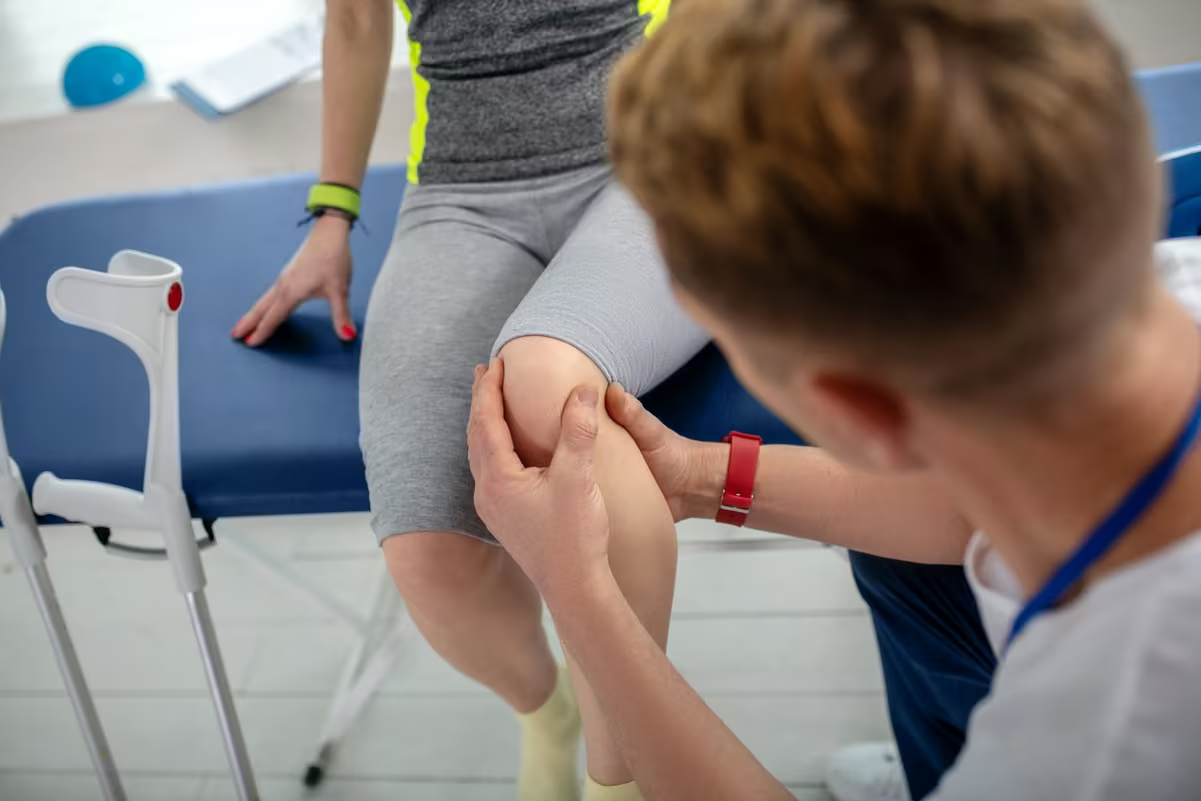
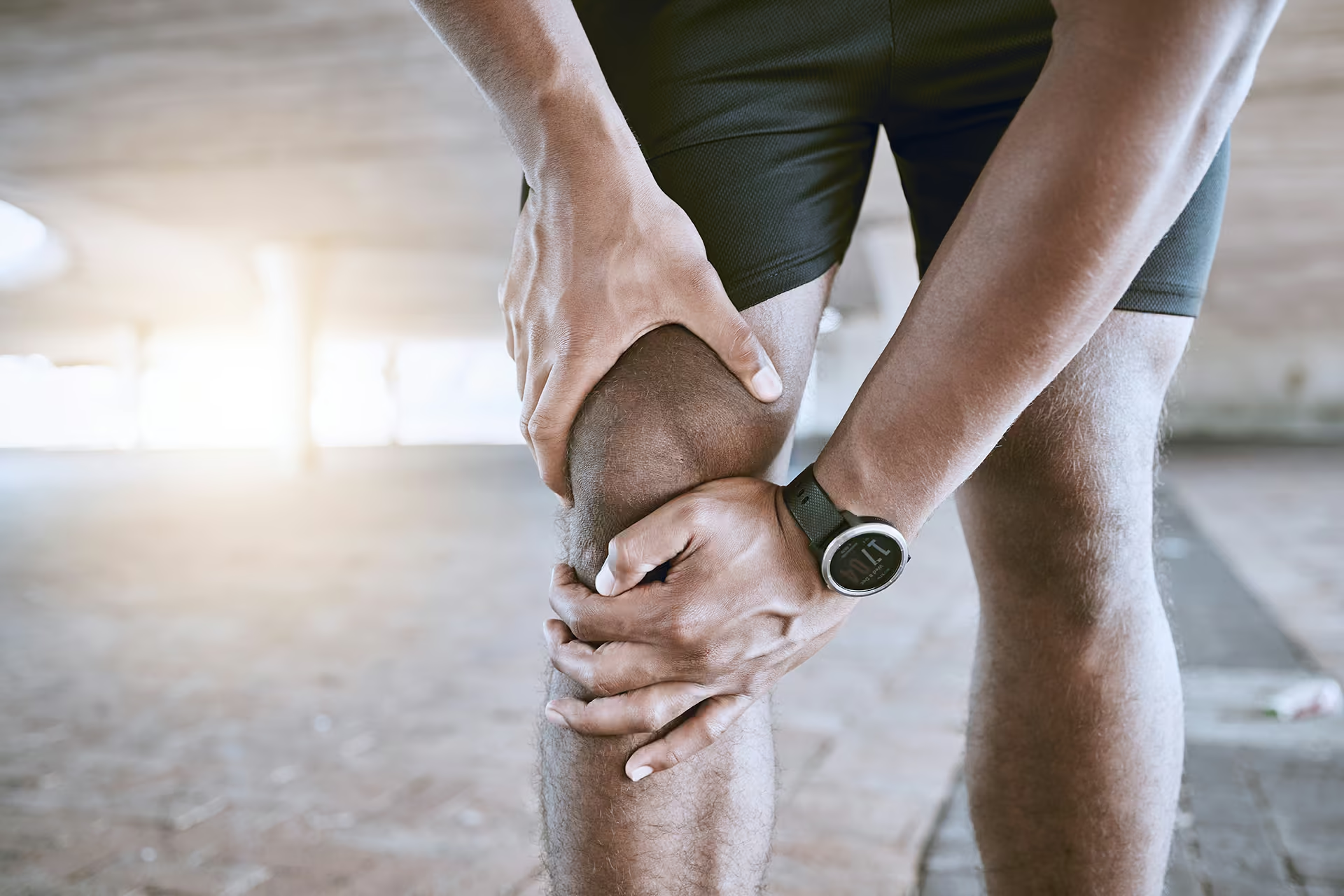
Knee pain is extremely common in people who run, train in the gym, play football, or take part in high-intensity activities such as CrossFit or Hyrox. The key is understanding exactly which structure is causing your pain, because the treatment approach varies significantly depending on the diagnosis.
At Liverpool Central Physio, we use diagnostic ultrasound and objective assessment to give you precise answers, not guesswork.
Common Knee Conditions We Diagnose and Treat
- Patellar tendinopathy (Jumper's Knee): Overload of the patellar tendon, common in footballers, runners, and athletes performing repeated jumping or acceleration. Pain is typically at the lower pole of the kneecap and worse after activity.
- Patellofemoral pain syndrome (Runner's Knee): Pain around or behind the kneecap, often aggravated by running, stairs, or prolonged sitting. Linked to abnormal loading at the patellofemoral joint.
- Quadriceps tendinopathy: Irritation of the tendon above the kneecap, often linked to heavy squatting or high-volume lunges.
- Fat pad impingement: Pain at the front of the knee below the kneecap, triggered by deep knee bends or hyperextension. Frequently misdiagnosed as patellar tendinopathy.
- Iliotibial band syndrome (ITBS): Sharp or burning pain on the outer aspect of the knee, very common in runners.
- Muscle strains and tears: Immediate visualisation of quadriceps or distal hamstring injuries to guide accurate recovery timelines.
Diagnostic Ultrasound for Knee Pain
Our high-resolution musculoskeletal ultrasound allows us to:
- Visualise the patellar and quadriceps tendons: Identifying thickening, neovascularisation, and structural changes that indicate tendinopathy.
- Assess the fat pad: Identifying impingement or inflammatory change to distinguish fat pad pain from tendon pain.
- Scan under load: Unlike MRI, we can scan the knee while it is loaded -- for example in a squat position -- to observe how structures behave under the specific demands of your sport.
- Identify muscle tears: Grading any disruption to the quadriceps or distal hamstring for accurate prognosis.
Dynamic Ultrasound: The Load-Test Advantage
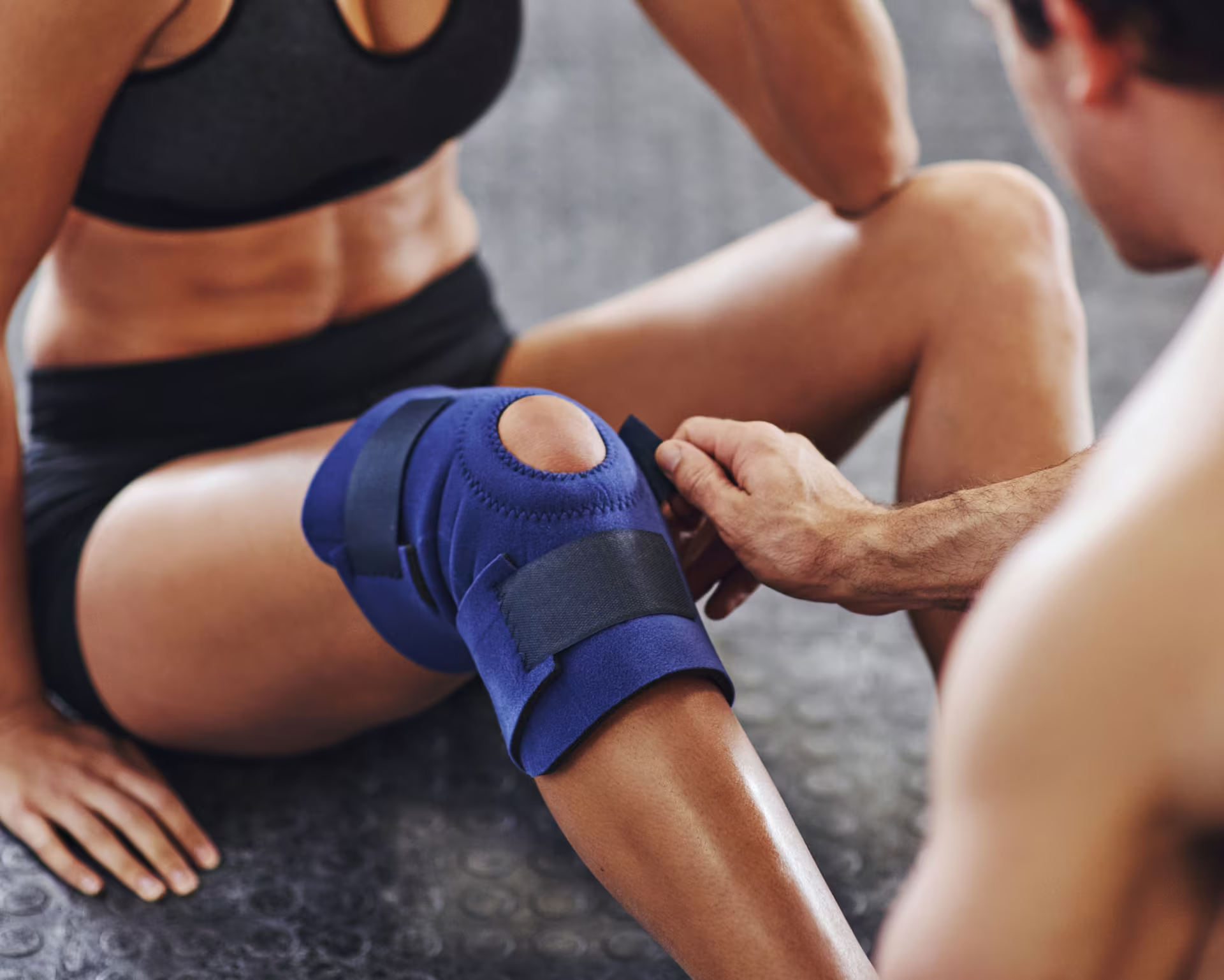
The ability to scan dynamically is particularly relevant for athletes. If your pain occurs during squats, we scan in that position. If there is diagnostic uncertainty between tendon and fat pad pain, dynamic scanning resolves this quickly. This information directly informs your physio rehabilitation programme and ensures you are not following a plan designed for the wrong structure.
Patellar Tendinopathy Rehabilitation: A Staged Approach
- Phase 1 - Isometric loading: Reduces pain and maintains tendon capacity during the reactive phase.
- Phase 2 - Isotonic strengthening: Slow, heavy resistance training through exercises such as leg press and Bulgarian split squats.
- Phase 3 - Energy storage and release: Adding plyometric elements once sufficient strength is established.
- Phase 4 - Return to running and sport: Graduated reintroduction of sport-specific demands with criteria-based progression.
Keeping You Training Throughout Recovery
Our goal is not to stop you training — it is to help you train smarter. We identify which activities are safe to continue and which should be modified during recovery. Most athletes can maintain some form of training throughout rehabilitation with appropriate adjustments to volume and intensity.
Related Conditions
Knee pain is frequently connected to issues above and below the joint. If you have pain running down the back of the thigh alongside your knee symptoms, our hamstring strain and tendinopathy page covers the assessment and rehabilitation pathway. For athletes with concurrent groin or inner thigh pain, see our groin and adductor pain page. Where lower back stiffness is contributing to your knee loading patterns, our back pain page provides relevant guidance.
Book an Appointment
Stop guessing and start loading the right way. Book your knee assessment and ultrasound scan at Liverpool Central Physio.