
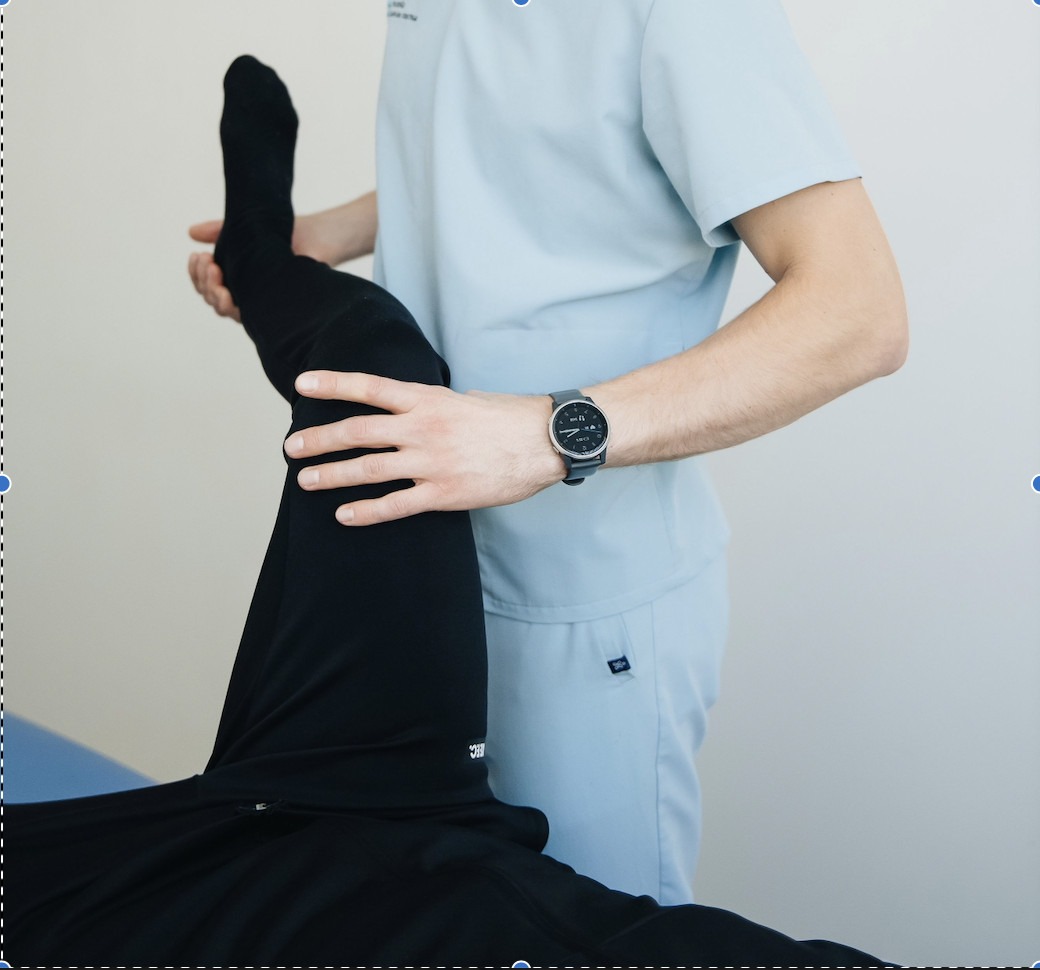
Understanding Groin and Adductor Pain
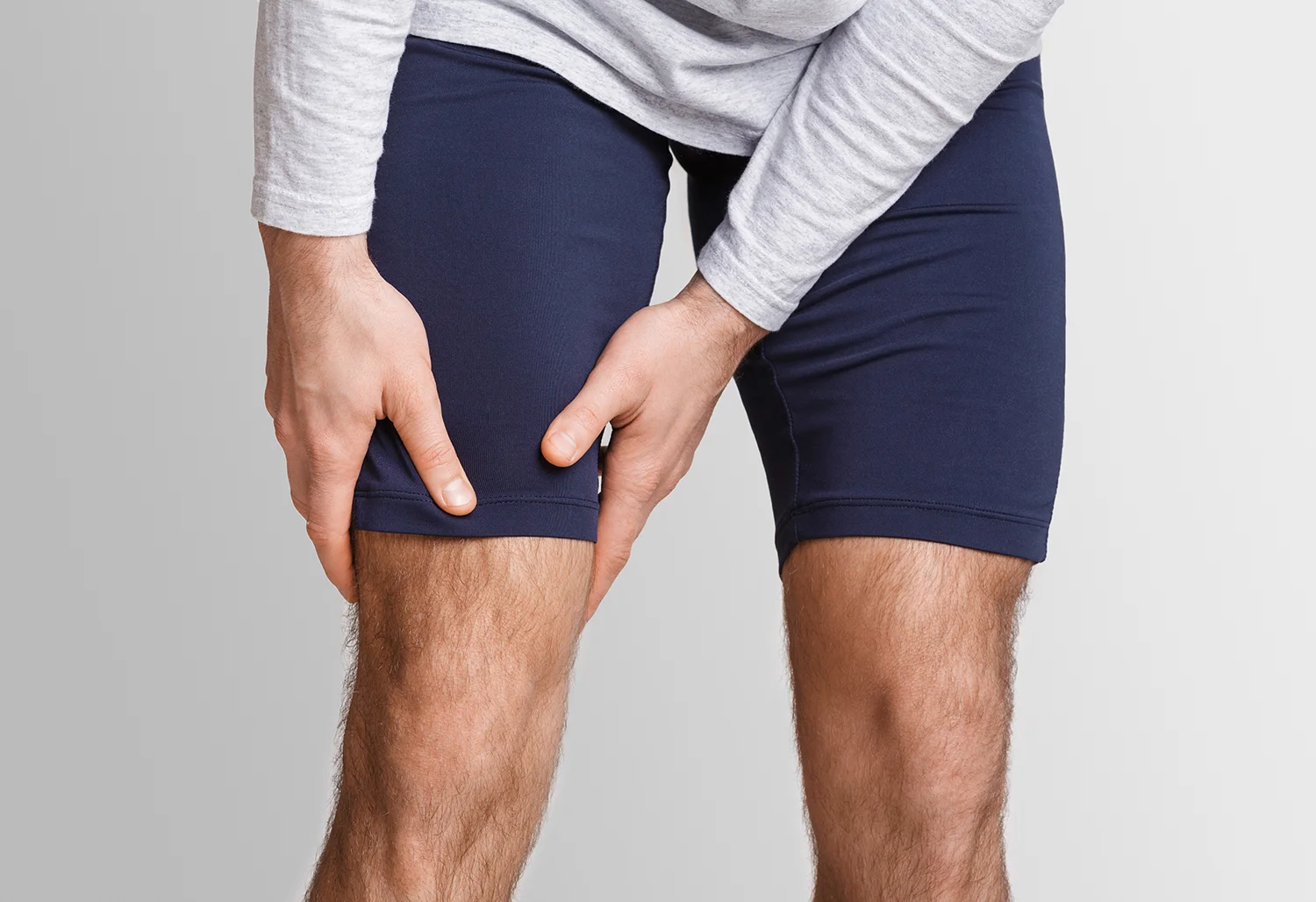
Groin and adductor injuries are among the most common lower limb problems affecting footballers, sprinters, and gym athletes. The adductor muscle group runs along the inner thigh and plays a critical role in change of direction, deceleration, and kicking.
Whether your pain came on suddenly during a sprint or developed gradually with increasing training load, an accurate diagnosis is essential to guide appropriate rehab physiotherapy and prevent recurrence.
Types of Groin and Adductor Injuries We Diagnose
- Adductor muscle strains (Grade I to III): Ranging from minor micro-tears to significant disruption of muscle fibres.
- Adductor tendinopathy: Chronic overload of the adductor tendon, common following a rapid increase in training volume.
- Athletic groin pain and sportsman's groin: A broader category of inguinal and adductor-related pain commonly seen in football and hockey players.
- Hip-related groin pain: Intra-articular hip pathology can refer pain to the groin and may require onward specialist referral.
Diagnostic Ultrasound for Adductor and Groin Injuries
Our real-time musculoskeletal ultrasound provides diagnostic precision beyond physical examination alone. We use it to:
- Grade adductor tears accurately: Visualising the extent and location of any muscle or tendon disruption to provide an evidence-based return-to-sport timeline.
- Assess tendon health: Distinguishing reactive tendinopathy (early overload) from degenerative tendinopathy (chronic structural change), which require different management approaches.
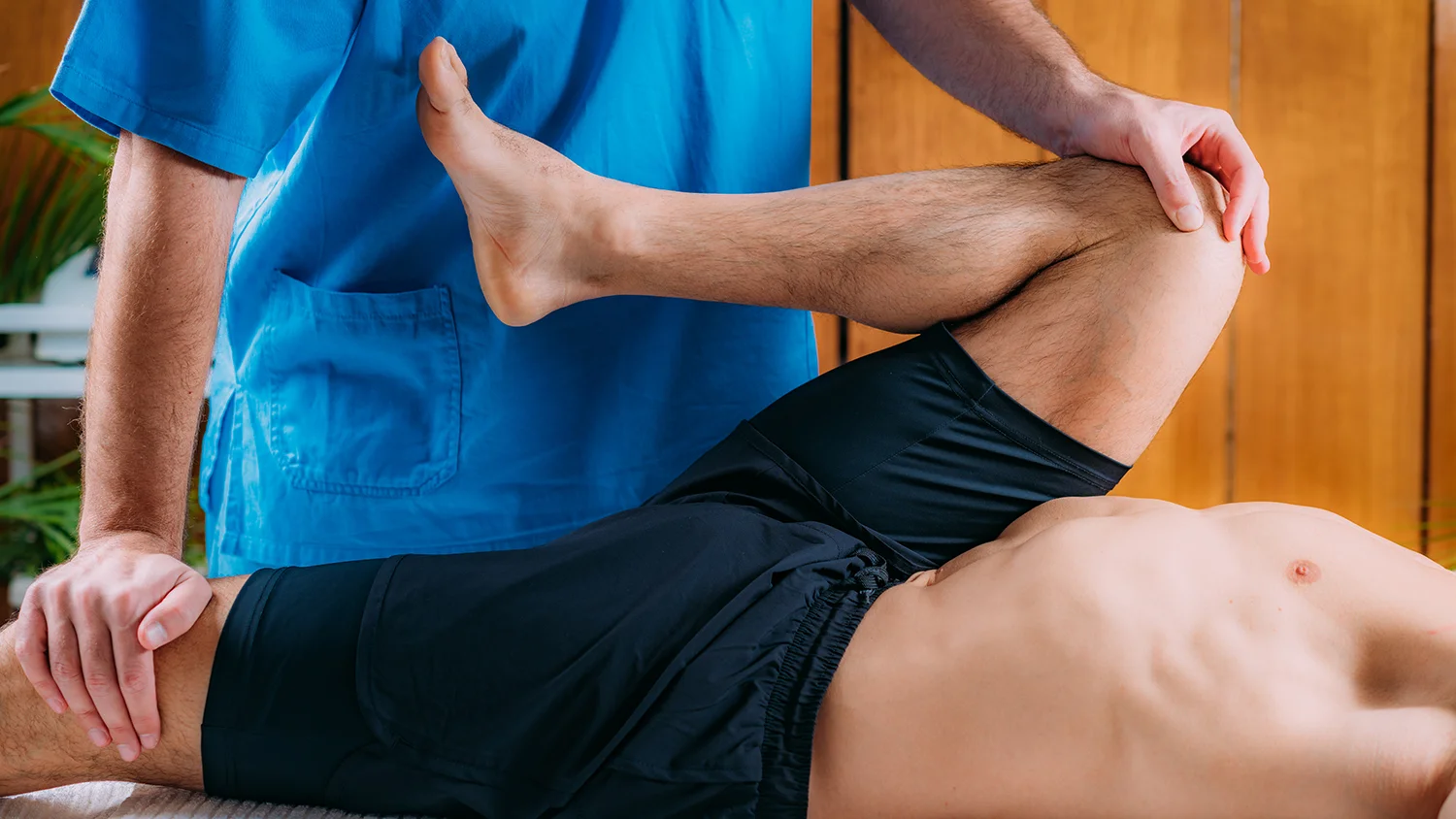
- Perform dynamic assessment: Moving the hip during scanning to identify impingement or pain-provoking positions in real time.
- Monitor healing: Providing serial imaging to track tissue recovery and guide progressive loading decisions.
The common denominator across all effective treatments is consistent, progressive movement.
Objective Strength Testing with Handheld Dynamometry
Manual muscle testing has documented reliability limitations. At Liverpool Central Physio, we use a calibrated handheld dynamometer to measure adductor strength precisely. This allows us to:
- Quantify strength deficits in the injured limb
- Compare symmetry between sides using established limb symmetry indices
- Track objective strength progress throughout rehabilitation
- Determine return-to-sport readiness based on evidence-based strength thresholds
- Reduce reinjury risk by ensuring full strength recovery before resumption of play
Rehabilitation: A Four-Stage Progressive Loading Approach
- Phase 1 - Pain management and isometrics: Reducing acute pain while
- Phase 2 - Isotonic strengthening: Building strength through full range of movement under controlled load.
- Phase 3 - Sport-specific training: Reintroducing sprinting, change of direction, and kicking mechanics.
- Phase 4 - Return to competition: Based on objective strength symmetry and functional testing data.
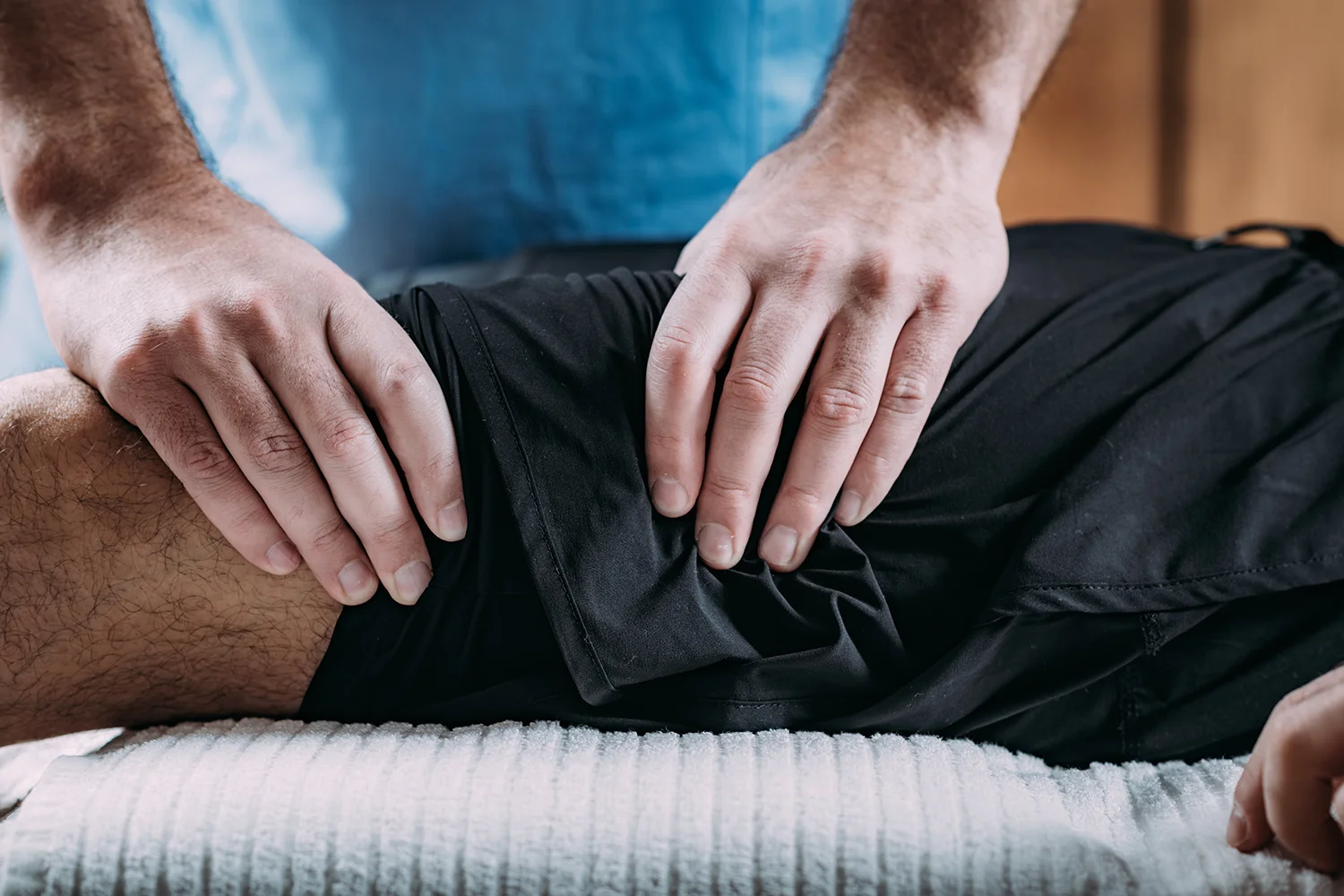

What Your Assessment Will Include
- Detailed history and training load review
- Movement pattern and range of motion analysis
- Strength and flexibility testing
- Diagnostic ultrasound imaging where clinically indicated
- A personalised rehabilitation plan with clear progression criteria
Related Conditions
Groin and adductor pain frequently coexists with hamstring and knee problems. If you are also experiencing pain at the sit bone or down the back of the thigh, our hamstring strain and tendinopathy page explains the differences between muscle tears and proximal tendinopathy. If your symptoms extend to the knee, see our knee pain and patellar tendinopathy page. For athletes with associated lower back involvement, our back pain page provides further guidance on spinal and hip interaction.
Book an Appointment
Get the clarity and direction you need to return to sport stronger. Book your adductor and groin assessment at Liverpool Central Physio.