
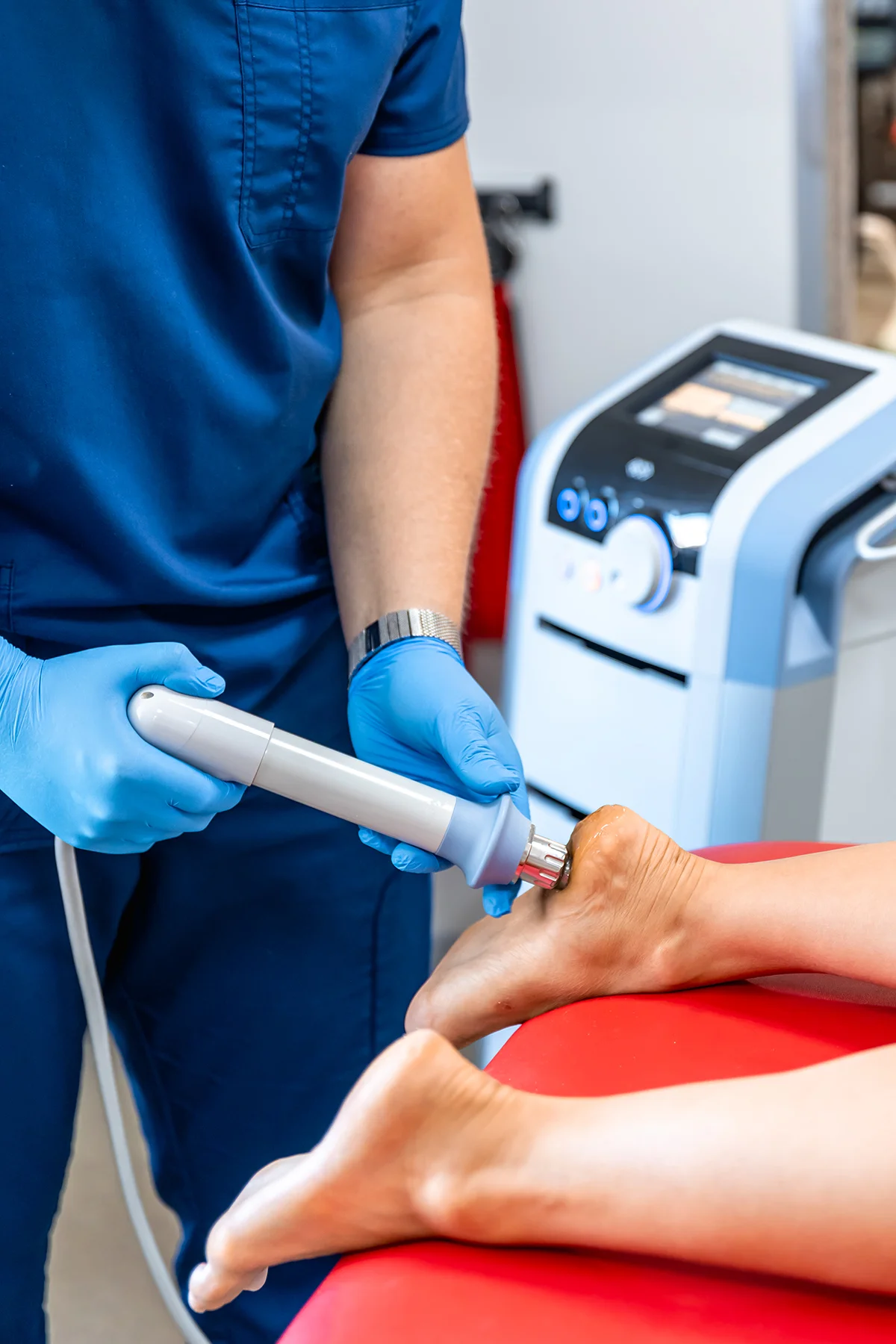
Advanced Shockwave Therapy with Diagnostic Ultrasound
Persistent tendon pain can stop you enjoying sport, make work uncomfortable and affect everyday activities. If you’ve been living with heel pain, Achilles pain, tennis elbow or another long standing tendon problem that hasn’t responded to rest or conventional physiotherapy, Shockwave Therapy may be an effective treatment option.
At Liverpool Central Physio, Shockwave Therapy is delivered by an HCPC registered physiotherapist following a comprehensive clinical assessment and diagnostic ultrasound scan where appropriate. Using ultrasound imaging allows us to identify the injured structure, assess the severity of the problem and target treatment more accurately.
Rather than simply treating the area that hurts, we focus on identifying the underlying source of your symptoms and creating a rehabilitation programme designed to support long term recovery.
Whether your goal is returning to running, getting back to the gym or simply walking without pain, we’ll create an evidence based treatment plan tailored to your diagnosis.
Why choose Liverpool Central Physio for Shockwave Therapy?
Physiotherapy is a healthcare profession that focuses on the assessment, diagnosis, and treatment of physical problems affecting movement and function.
Physiotherapy aims to:
- Comprehensive physiotherapy assessment by an HCPC registered physiotherapist
- Diagnostic ultrasound assessment where clinically appropriate
- Evidence based Shockwave Therapy protocols
- Individual rehabilitation programme designed around your injury
- Honest advice about whether Shockwave Therapy is the right option for you
- Convenient appointments in Liverpool city centre
What is Shockwave Therapy?
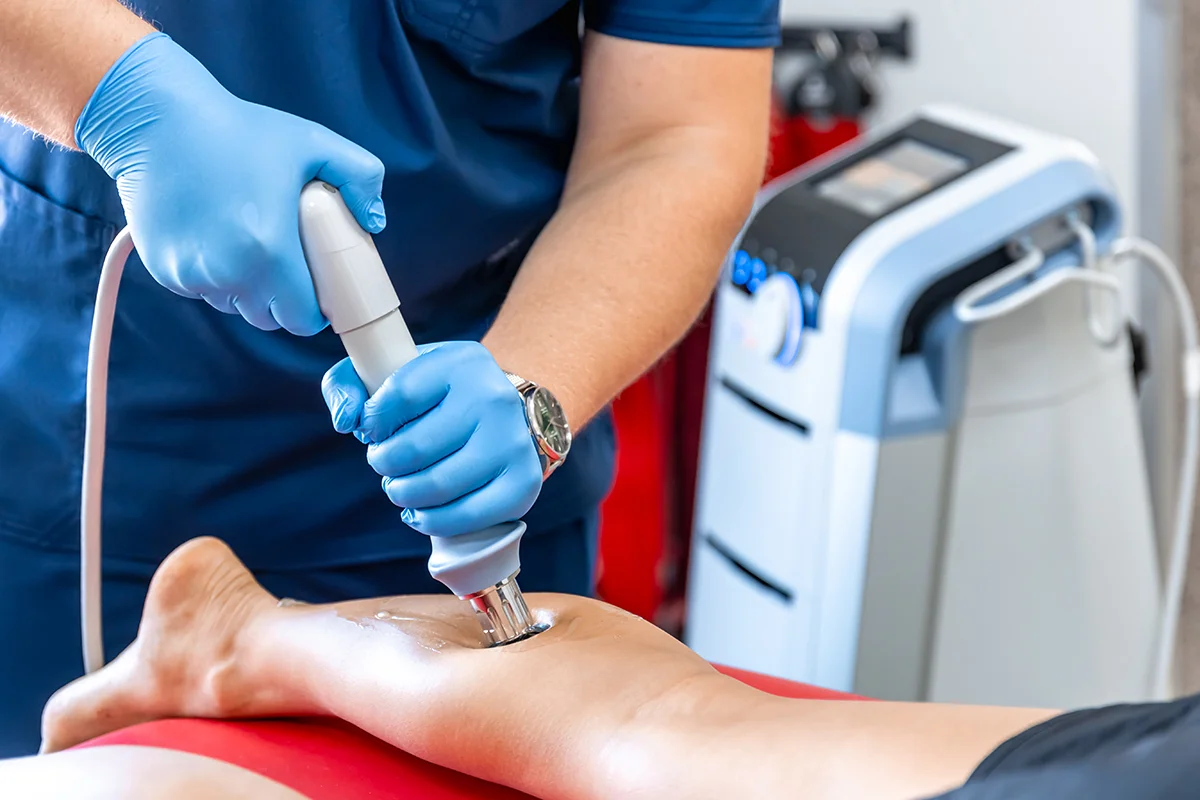
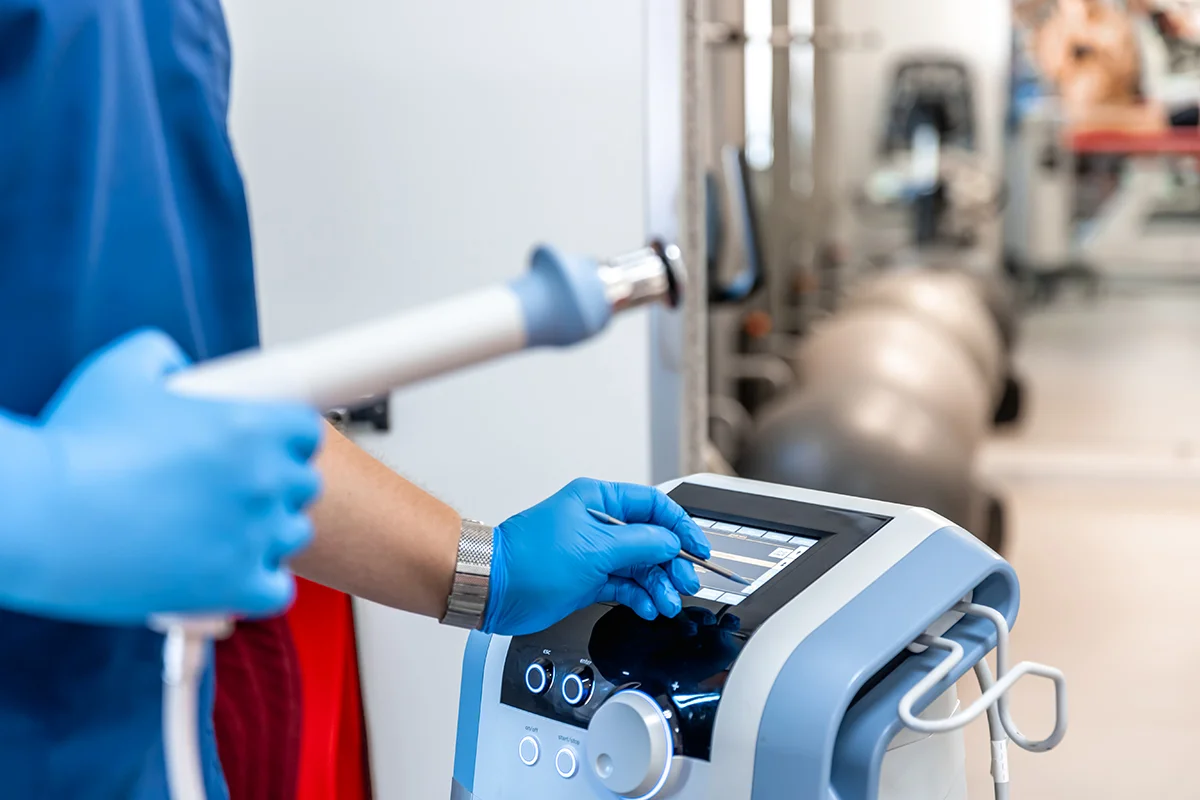
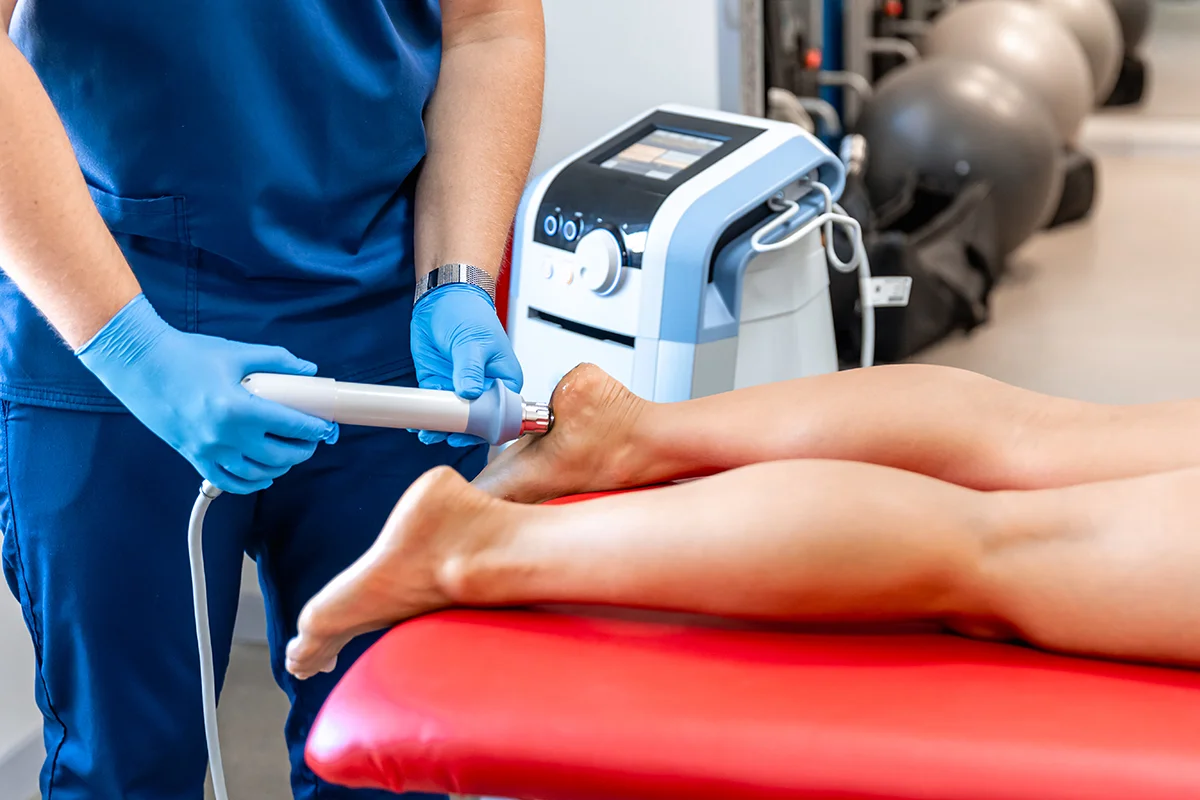
Shockwave Therapy, sometimes called Extracorporeal Shockwave Therapy (ESWT), is a non surgical treatment that delivers high energy acoustic waves into damaged tendon or soft tissue.
These acoustic waves stimulate a healing response within long standing injured tissue by encouraging increased blood flow, influencing pain mechanisms and promoting tissue repair.
Shockwave Therapy has become an established treatment for several chronic tendon conditions, particularly where symptoms have persisted despite exercise rehabilitation or previous treatment.
At Liverpool Central Physio, Shockwave Therapy is never used in isolation. Current evidence supports combining Shockwave Therapy with a structured strengthening programme, helping improve tendon capacity and supporting long term recovery.
How does Shockwave Therapy work?
Shockwave Therapy works by delivering carefully controlled acoustic pulses into the affected tissue.
This process is believed to encourage several biological responses, including:
- Increased local blood circulation
- Stimulation of tendon healing
- Reduction in pain sensitivity
- Breakdown of calcific deposits in appropriate conditions
- Improved tissue regeneration
Treatment itself usually takes less than ten minutes, although your appointment also includes clinical assessment, progress monitoring and rehabilitation advice where appropriate.
Many patients begin noticing improvements after several sessions, although recovery varies depending on the condition being treated, how long symptoms have been present and how consistently rehabilitation exercises are completed.
Conditions treated with Shockwave Therapy
Shockwave Therapy is supported by research for several persistent tendon conditions.
At Liverpool Central Physio, Shockwave Therapy may be recommended for:
- Plantar fasciitis
- Heel spurs (calcaneal spurs)
- Achilles tendinopathy
- Patellar tendinopathy
- Gluteal tendinopathy
- Hamstring tendinopathy
- Calcific shoulder tendinopathy
- Tennis elbow
- Golfer's elbow
During your assessment we’ll determine whether your symptoms are suitable for Shockwave Therapy or whether another treatment approach would be more appropriate.
If your pain is caused by another condition, we will explain the findings clearly and recommend the most appropriate physiotherapy treatment.
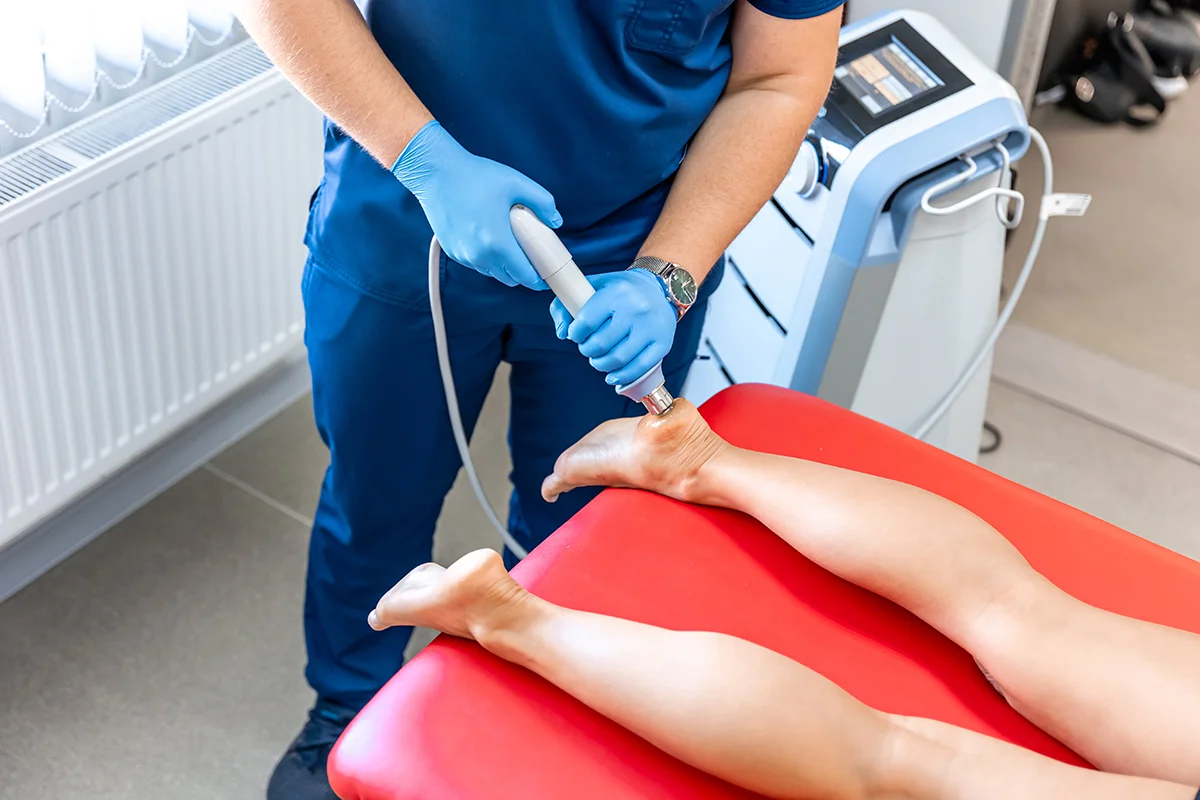
Shockwave Therapy for plantar fasciitis and heel pain
Plantar fasciitis is one of the most common reasons people seek Shockwave Therapy.
Pain is typically felt beneath the heel, especially during the first few steps in the morning or after long periods of sitting. While many cases improve with physiotherapy and exercise, some become persistent and continue for several months.
Shockwave Therapy may be recommended when symptoms have lasted for more than three months and conservative treatment has not provided sufficient improvement.
Following a full assessment, we’ll determine whether your symptoms are consistent with plantar fasciitis, heel spur syndrome or another source of heel pain before recommending treatment.
If required, we may also recommend physiotherapy, sports physiotherapy or further rehabilitation alongside Shockwave Therapy to help restore strength, mobility and function.
Why Diagnostic Ultrasound Makes Shockwave Therapy More Accurate
One of the biggest differences at Liverpool Central Physio is that we don’t rely solely on symptoms or physical examination when planning your treatment. Where clinically appropriate, your assessment includes a diagnostic ultrasound scan to provide a clearer understanding of the injured tendon or soft tissue before Shockwave Therapy begins.
Many tendon conditions can produce similar symptoms, but the underlying cause may differ. Diagnostic ultrasound allows us to assess the affected tissue in real time, helping us make informed treatment decisions based on what we can actually see, rather than relying on estimation alone.
Ultrasound imaging can help us:
- Identify the specific tendon or soft tissue causing your symptoms
- Assess the extent of tendon degeneration or injury
- Detect calcific changes within the tendon where present
- Monitor changes throughout your rehabilitation if clinically indicated
Ultrasound guided assessment and personalised rehabilitation
Shockwave Therapy is only one part of successful tendon rehabilitation.
Once we’ve identified the affected structure, we’ll explain exactly what the scan shows, how it relates to your symptoms and what your recovery is likely to involve. We’ll then combine Shockwave Therapy with a progressive rehabilitation programme designed specifically for your diagnosis.
This may include:
- Progressive strengthening exercises
- Mobility work where appropriate
- Load management advice
- Return to running or sport guidance
- Advice to help reduce the risk of future tendon problems
What happens during your Shockwave Therapy appointment?
Initial assessment
Your first appointment includes a detailed physiotherapy assessment carried out by an HCPC registered physiotherapist. We’ll assess your movement, strength and the affected area to establish an accurate diagnosis.
Where clinically appropriate, we’ll also perform a diagnostic ultrasound scan to examine the injured tendon or soft tissue in greater detail. This allows us to confirm the diagnosis and ensure Shockwave Therapy is suitable for your condition.
Shockwave treatment
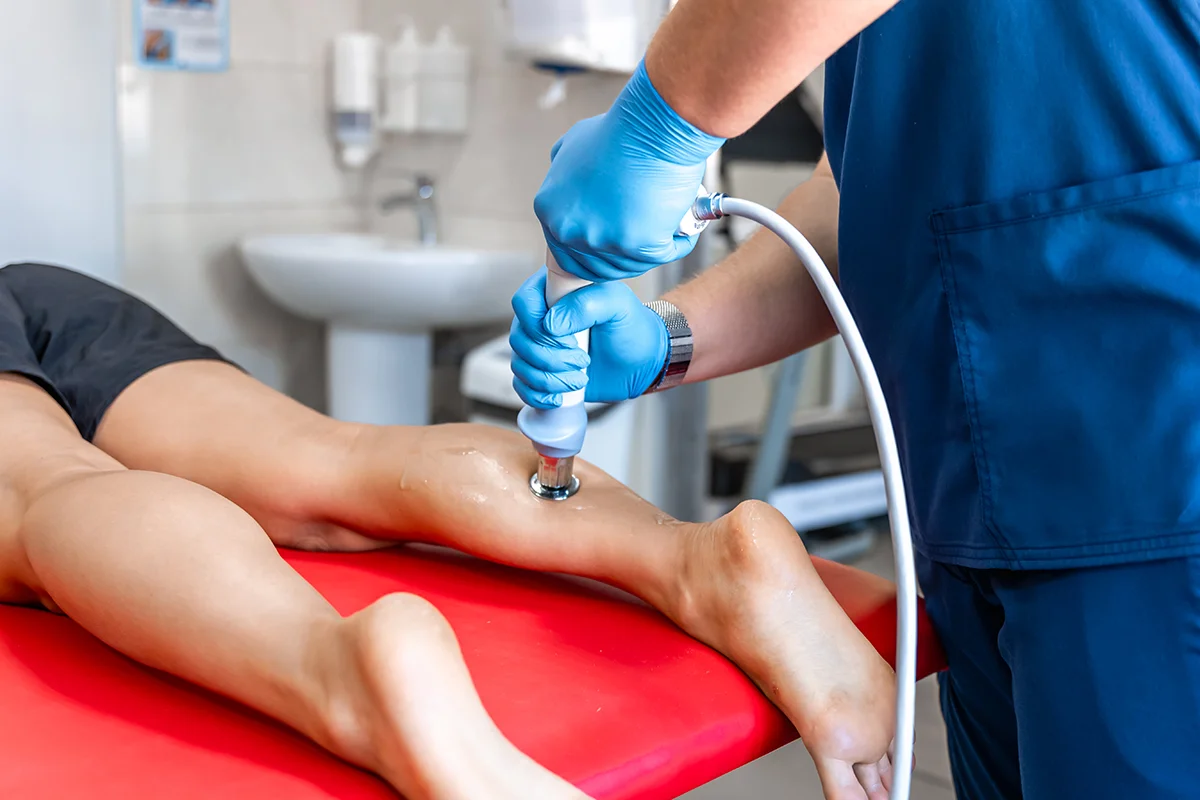
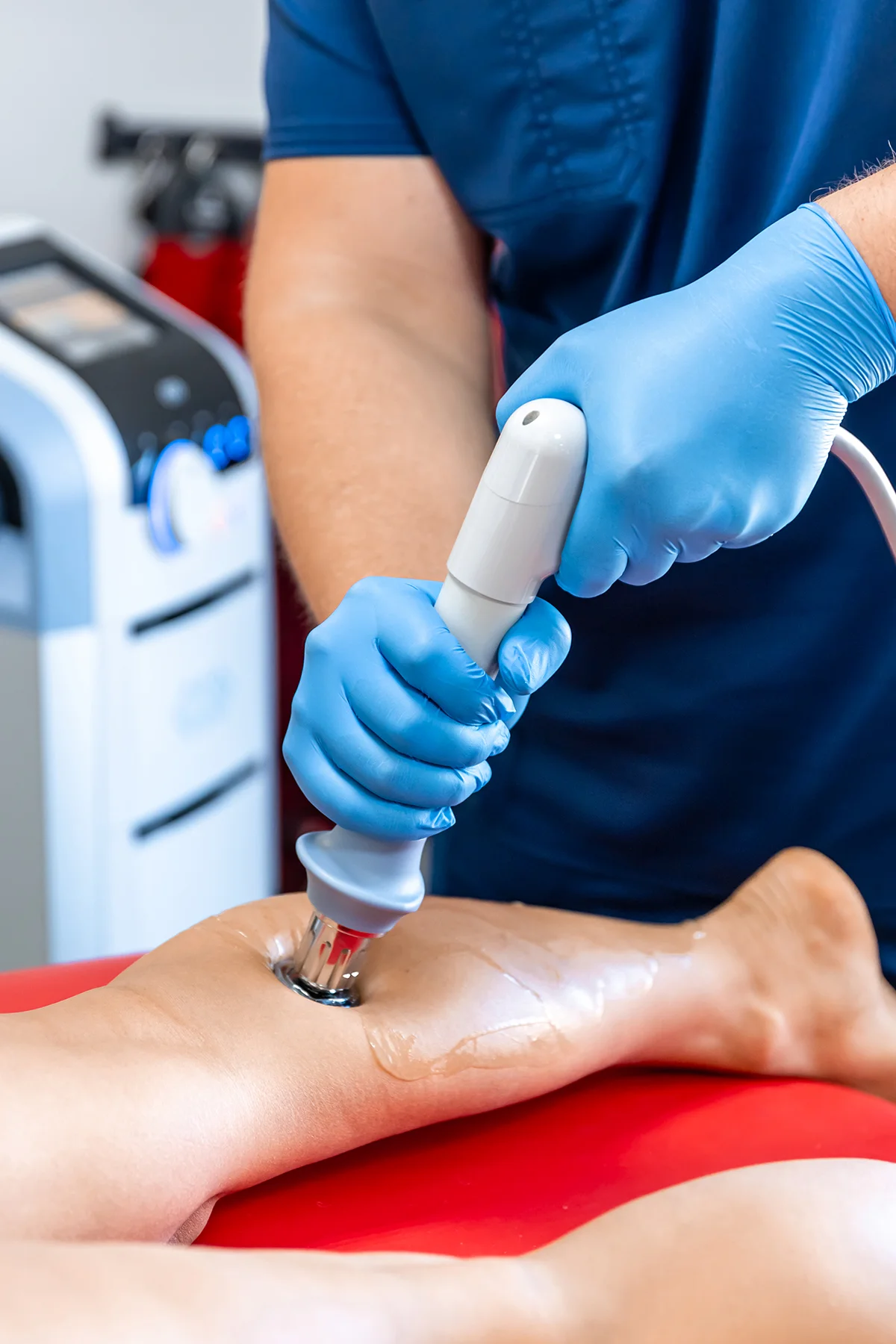
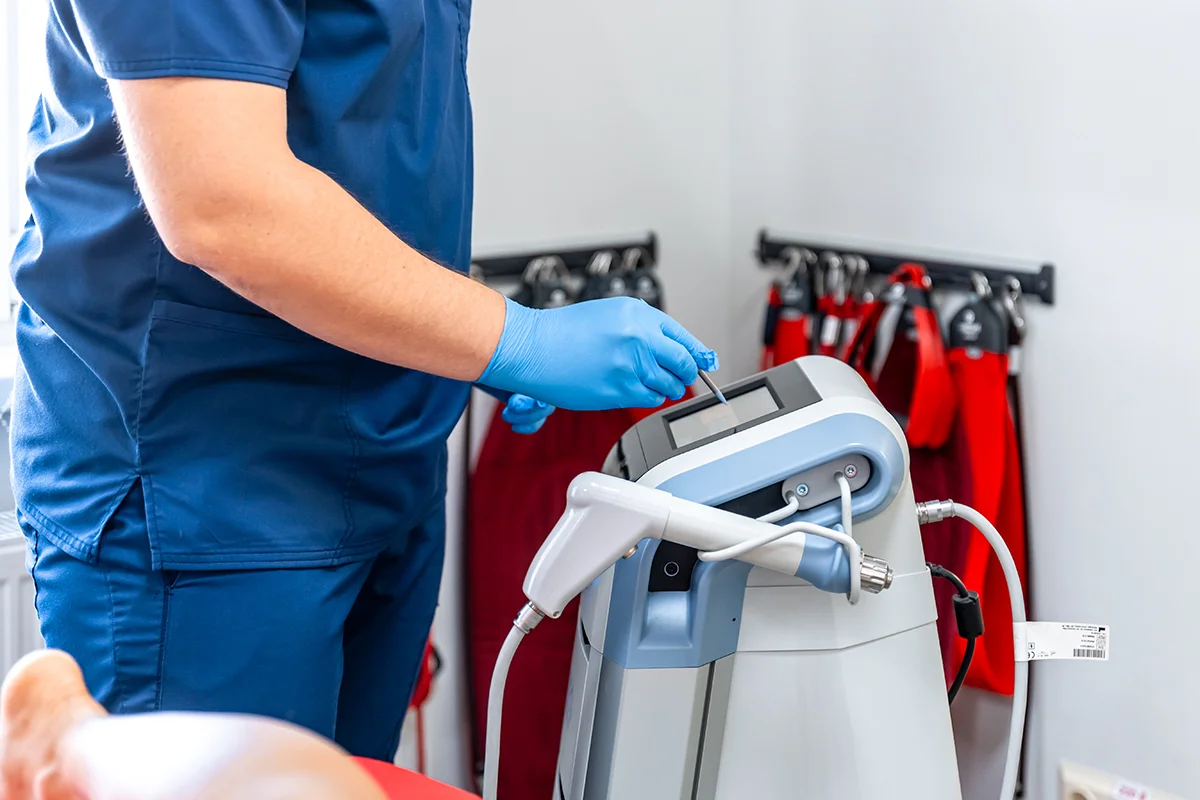
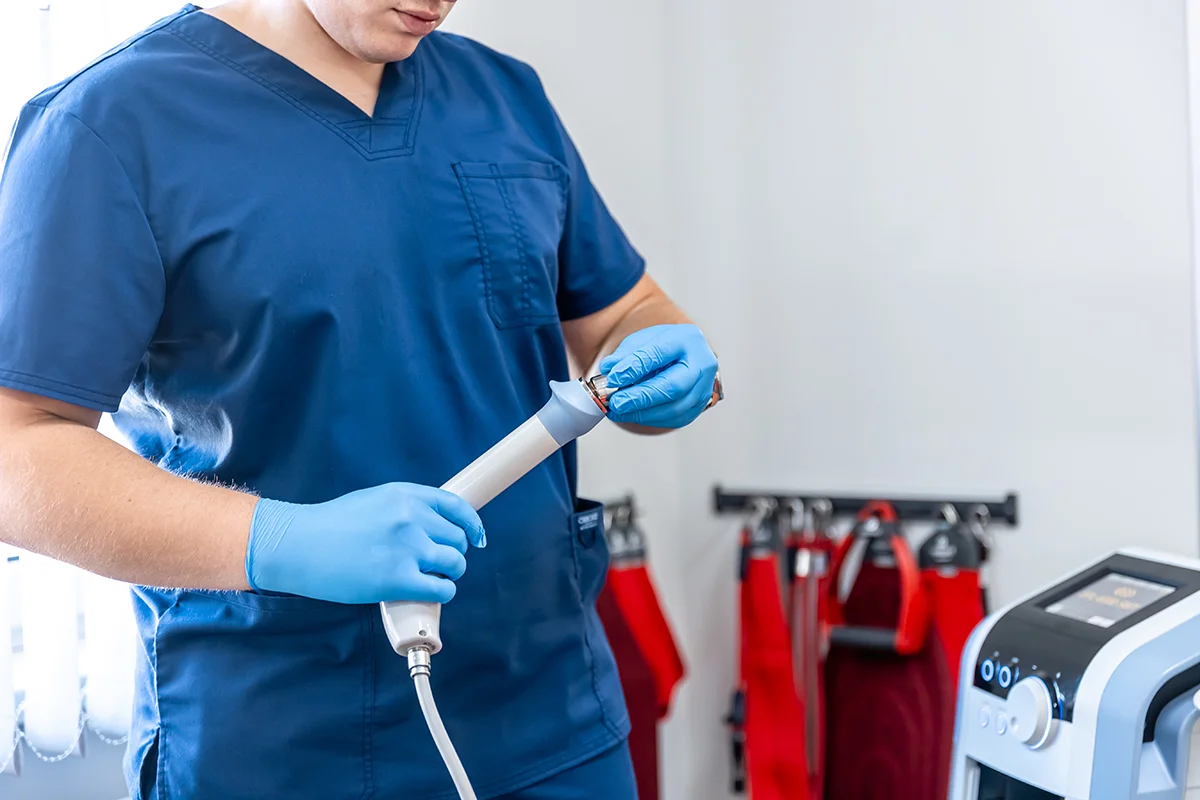
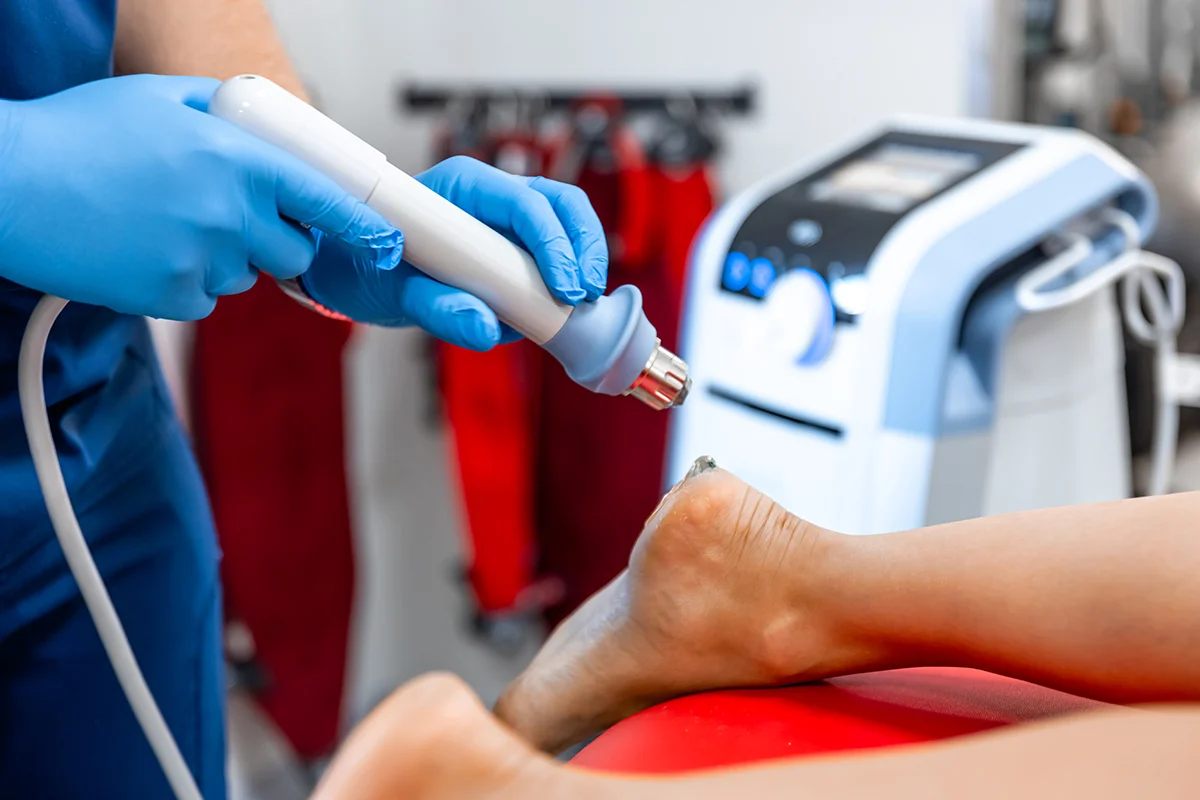
If Shockwave Therapy is appropriate, treatment is delivered directly over the affected tissue using a handheld device that produces high energy acoustic waves.
Treatment usually takes around 5 to 10 minutes, depending on the area being treated. Most patients describe the sensation as uncomfortable rather than painful, although this varies depending on the sensitivity of the injured tissue.
We’ll adjust the treatment to ensure it’s delivered at a level that’s both effective and manageable.
Your rehabilitation programme
Following treatment, you’ll receive an individual rehabilitation programme based on your diagnosis, current level of function and personal goals.
Your exercises are an essential part of recovery and are designed to progressively improve tendon strength and resilience over time.
If appropriate, your rehabilitation may also include advice on returning to work, running, the gym or your chosen sport safely.
Is Shockwave Therapy right for you?
Shockwave Therapy is most commonly recommended for people with persistent tendon pain that hasn’t responded to previous conservative treatment.
You may be a suitable candidate if:
- Your symptoms have lasted for more than three months
- Rest or activity modification hasn't resolved your pain
- You've previously tried physiotherapy or massage with limited improvement
- Your pain continues to return when you increase activity
- Your tendon injury is affecting work, exercise or daily life
How many Shockwave Therapy sessions will I need?
The number of Shockwave Therapy sessions you require depends on several factors, including your diagnosis, how long you’ve been experiencing symptoms and how your tendon responds to treatment.
For many chronic tendon conditions, current evidence supports a course of approximately four to six Shockwave Therapy sessions, typically delivered once per week. This allows enough time for the tissue to respond while maintaining consistent progress throughout your rehabilitation.
Throughout your treatment, we’ll continually assess your symptoms, function and response to therapy. If you’re progressing well, we’ll gradually shift the focus towards strengthening and returning to your normal activities with confidence.
For more persistent tendon injuries that have been present for six months or longer, recovery may take longer. This doesn’t necessarily mean more Shockwave Therapy sessions are required. Instead, we’ll reassess your condition after your initial treatment programme and advise whether additional treatment is clinically appropriate or whether your rehabilitation should continue through exercise alone.
Our aim is always to provide the right treatment for the right amount of time, rather than recommending unnecessary appointments.
Shockwave Therapy pricing
Initial Physiotherapy Assessment with Diagnostic Ultrasound
Shockwave Therapy Session
5-Session Recovery Package: £250 (Save £50)
- Tailored to You: Clinical evidence suggests 3 to 6 sessions are ideal for chronic tendon conditions. Your physiotherapist will assess your specific injury and recommend the exact number you need.
- Complete Care: If a package is right for you, this 5-session block offers a structured, cost-effective route to recovery, including ongoing rehab reviews and expert advice.
Why choose Liverpool Central Physio?
Choosing the right clinic is about more than simply accessing Shockwave Therapy. An accurate diagnosis, evidence based treatment plan and personalised rehabilitation programme all play an important role in achieving the best possible outcome.
Patients choose Liverpool Central Physio because we offer:
- HCPC registered physiotherapists with expertise in musculoskeletal injuries and tendon rehabilitation
- Diagnostic ultrasound imaging where clinically appropriate to improve assessment accuracy
- Evidence based treatment programmes tailored to your condition
- Rehabilitation plans designed around your lifestyle, work and sporting goals
- Honest advice about whether Shockwave Therapy is the right treatment for you
- Convenient Liverpool city centre location with flexible appointments