
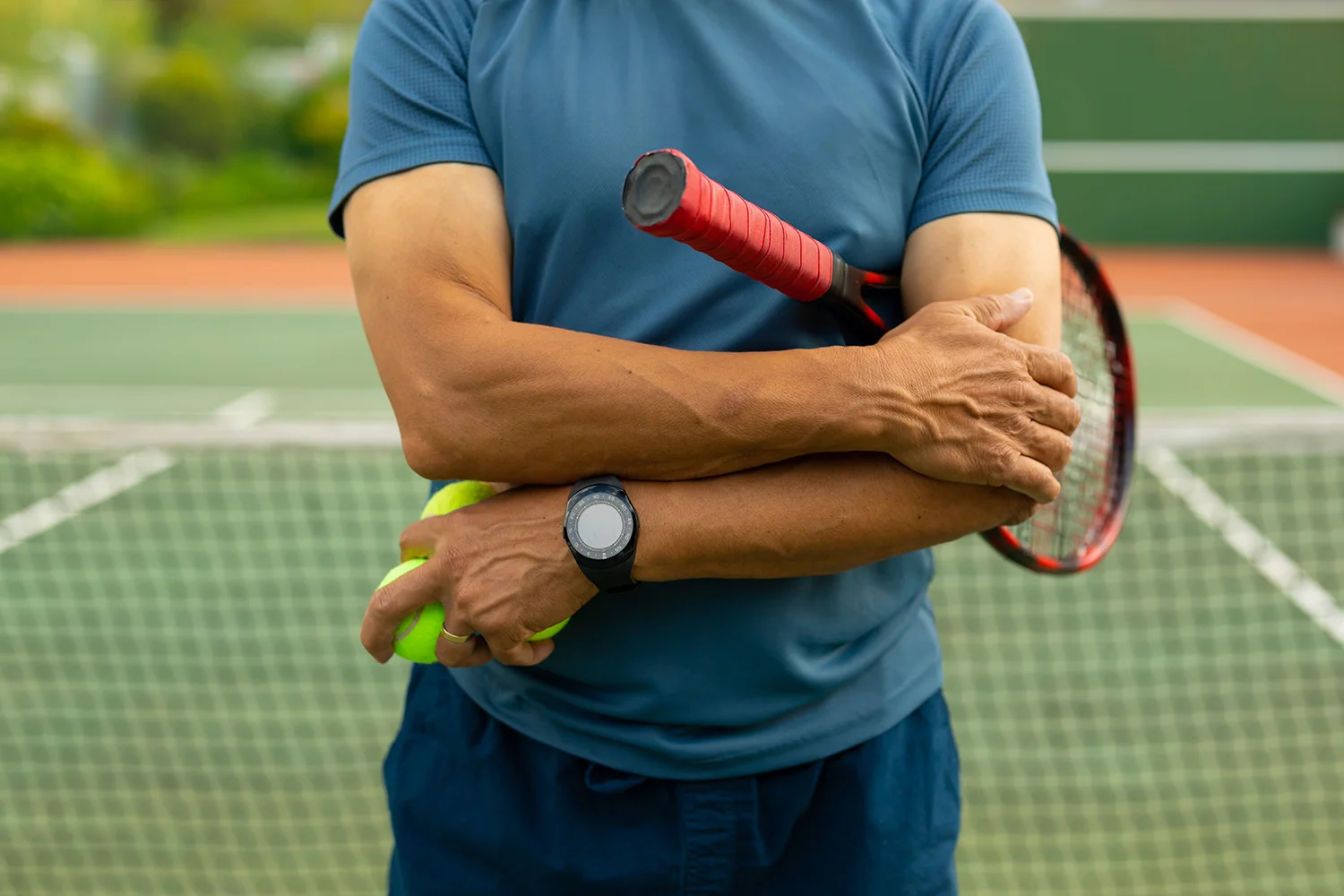
Tennis Elbow and Padel Elbow: Why Rest Alone Is Not Enough
Lateral epicondylalgia, commonly known as tennis elbow or padel elbow, is one of the most common overuse injuries in racket sport players. It affects the tendons on the outside of the elbow that attach to the lateral epicondyle.
If you have been resting your elbow only to have the pain return the moment you step back on the court, rest alone is not the solution. You need an accurate tissue-level diagnosis and a structured rehabilitation plan to address the underlying tendon changes.
Diagnostic Ultrasound for Elbow Pain: What It Reveals
At Liverpool Central Physio, we use diagnostic musculoskeletal ultrasound as a primary imaging tool for elbow conditions. Unlike X-ray, which only shows bone, or MRI, which requires lying still in a scanner, ultrasound allows us to visualise soft tissues in real time.
We use ultrasound to accurately identify:
- Tendinopathy: Assessing the exact condition of the common extensor or flexor tendon, including reactive change, structural disorganisation, or chronic degeneration.
- Partial or full tendon tears: Identifying the extent of any tearing to provide an accurate, evidence-based recovery timeline.
- Joint effusion: Excess joint fluid caused by repetitive loading, which is visible and measurable with ultrasound.
- Bursitis and nerve-related irritation: Identifying olecranon bursitis and ulnar nerve irritation, which can mimic or accompany tendinopathy.
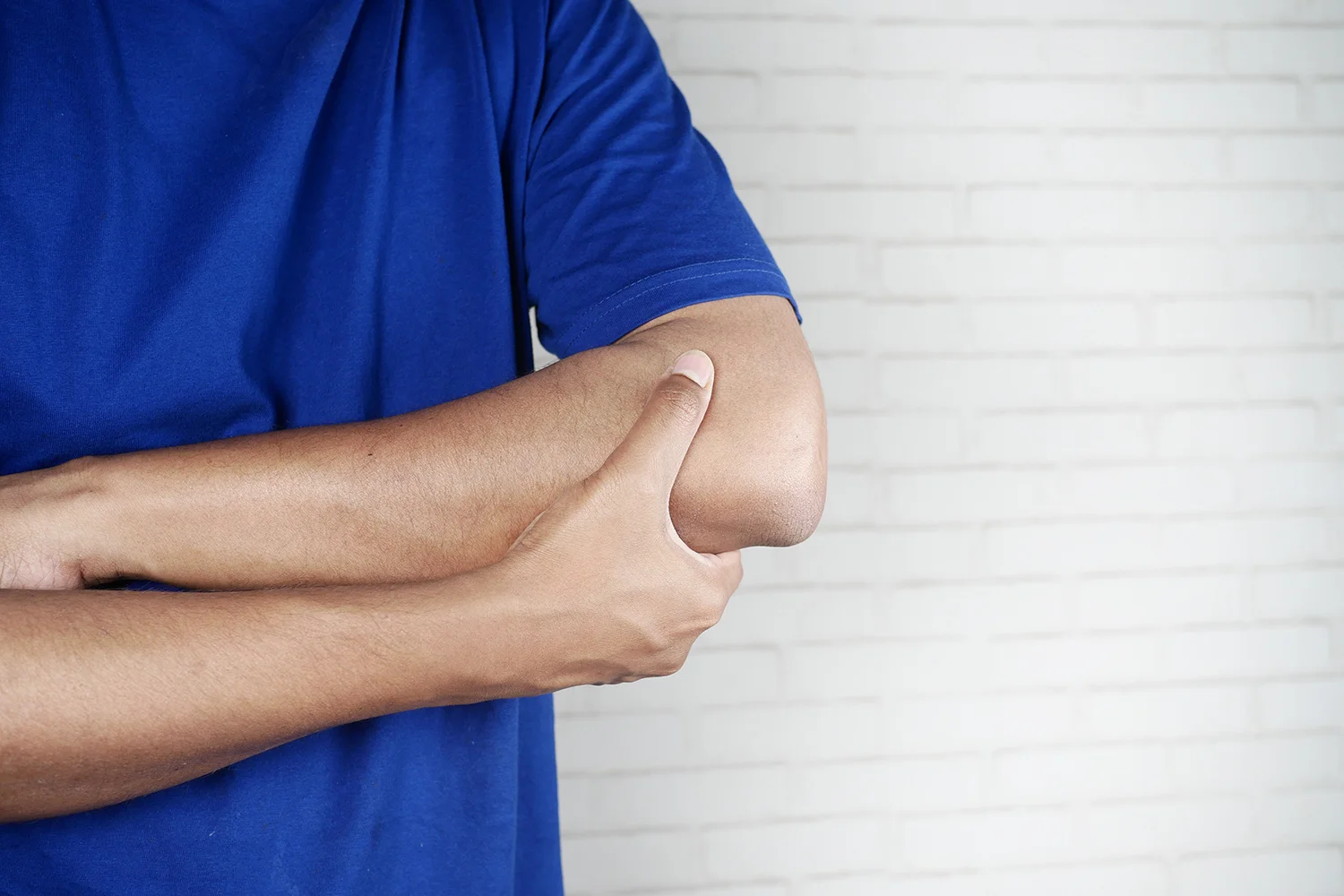
Dynamic Ultrasound: Scanning While You Move
One significant clinical advantage of ultrasound over MRI is the ability to scan dynamically, meaning while the joint is moving or loaded. We can assess the elbow while you mimic your grip, swing, or specific movement pattern, identifying exactly where mechanical stress is occurring. This information directly shapes your rehabilitation programme and ensures we are treating the right structure in the right way.

Rehabilitation for Lateral Epicondylalgia: A Staged Approach
Effective treatment for tennis elbow is grounded in progressive tendon loading. Evidence supports the following approach:
- Phase 1 - Isometric loading: Reducing pain while maintaining tendon capacity.
- Phase 2 - Isotonic strengthening: Gradually introducing eccentric and concentric loading through the forearm extensors.
- Phase 3 - Sport-specific loading: Reintroducing racket sport movements under controlled conditions before full return to play.
- Phase 4 - Equipment review: Discussing grip size, string tension, and technique factors that may be contributing to load on the tendon.
Golfer's Elbow: Medial Epicondylalgia
Golfer’s elbow affects the tendons on the inner side of the elbow. It is common in golfers, gym athletes, and manual workers. Our ultrasound assessment and staged rehabilitation approach applies equally to this condition.
Who Else Do We Treat for Elbow Pain?
- Gym-related elbow strain
- Work-related repetitive strain injury (RSI)
- Elbow pain following a fall or direct impact
- Chronic elbow pain without a clear previous diagnosis
Related Conditions
Elbow pain in racket sport players is often associated with shoulder and upper back problems. If your pain extends into the shoulder, our shoulder pain and rotator cuff page covers the diagnostic and rehabilitation options available. If you are also experiencing neck or upper back stiffness, see our neck pain treatment page. For those with wider upper limb involvement, our back pain page provides relevant context on how spinal loading can contribute to arm and elbow symptoms.
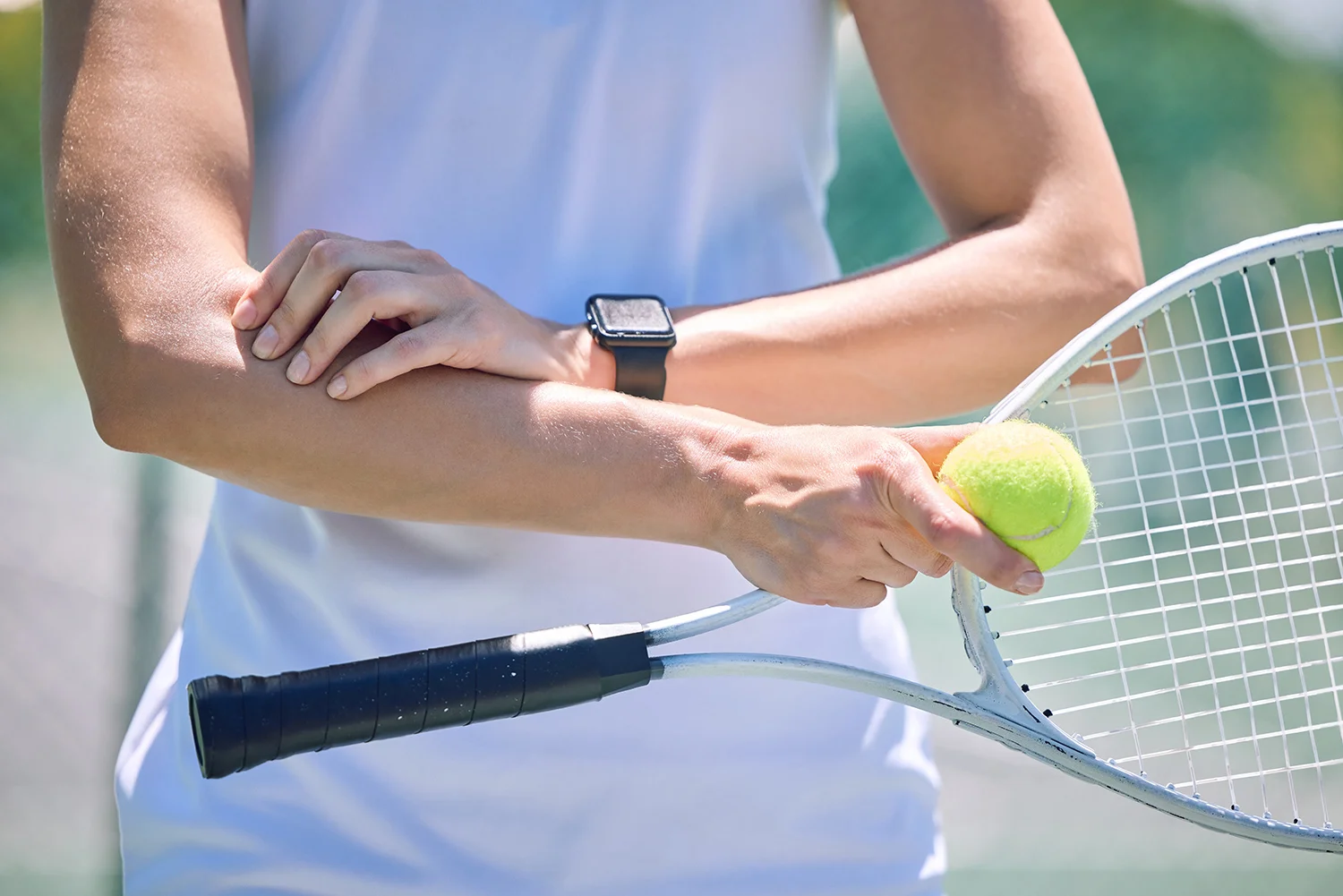
Book an Appointment
Get a definitive diagnosis and a clear return-to-sport plan. Book your elbow assessment and ultrasound scan at Liverpool Central Physio.