

Hamstring Injuries: Why Accurate Diagnosis Is Everything
Whether you experienced a sudden acute hamstring strain during a sprint or are dealing with the persistent deep ache of proximal hamstring tendinopathy under your sit bone, the pathway to recovery is very different in each case. Accurate diagnosis is not optional — it is the foundation of effective treatment.
At Liverpool Central Physio, we combine diagnostic ultrasound imaging with objective strength testing and structured, evidence-based rehabilitation to get you back to full speed with confidence.
Types of Hamstring Injuries We Treat
- Grade I hamstring strain: Minor muscle fibre tearing. Full recovery typically expected within 2 to 4 weeks with appropriate management.
- Grade II hamstring strain: Partial muscle tearing. Recovery typically 4 to 8 weeks depending on the location and extent of injury.
- Grade III hamstring strain: Complete or near-complete muscle rupture. May require specialist orthopaedic review.
- Proximal hamstring tendinopathy (PHT): Chronic overload of the hamstring tendon at the ischial tuberosity (sit bone). Common in distance runners and cyclists.
- Hamstring avulsion injury: A rare but serious injury where the tendon separates from the bone. Requires urgent specialist review.
Diagnostic Ultrasound for Hamstring Injuries
Many hamstring injuries are mismanaged because the exact location and severity are not properly assessed. Our high-resolution musculoskeletal ultrasound provides definitive tissue-level information, including:
- Accurate tear grading: Visualising any haematoma or muscle fibre disruption to provide an evidence-based return-to-play timeline.
- Proximal tendon assessment: Examining the hamstring tendon at the sit bone for thickening, neovascularisation, or structural change, which are key features that distinguish tendinopathy from referred pain.
- Scar tissue identification: Dynamic scanning reveals areas of scar tissue or structural weakness that are not apparent on static imaging.
- Ruling out serious pathology: Identifying partial or complete avulsion injuries that require prompt specialist referral.

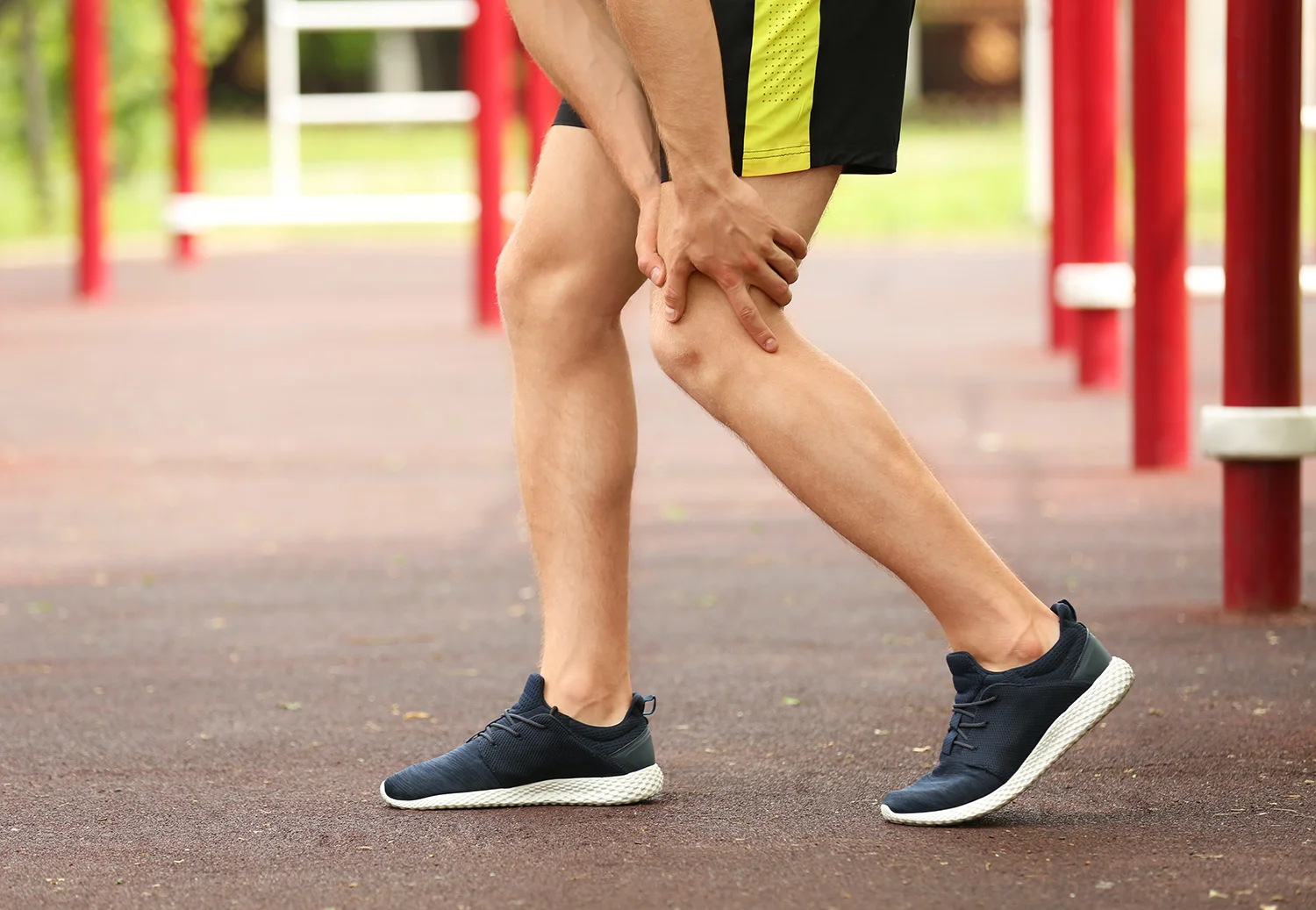
Objective Strength Testing: The Key to Safe Return to Sport
The primary reason hamstring injuries recur is returning to full-speed running before the muscle is truly ready. We use calibrated handheld dynamometry to measure:
- Peak force production in the injured limb
- Limb symmetry index compared to the uninjured side
- Hamstring-to-quadriceps strength ratio, a key marker of sprint readiness
Return to full-speed sport is only recommended when objective strength criteria are met, not simply when pain has resolved.
Evidence-Based Rehabilitation: A Four-Stage Approach
- Stage 1 -- Acute management and isometrics: Reducing pain and swelling while maintaining muscle activation to prevent atrophy.
- Stage 2 -- Eccentric strengthening: Eccentric exercises, including the Nordic hamstring curl and Romanian deadlift, have strong evidence for both hamstring rehabilitation and injury prevention.
- Stage 3 -- High-load strength and power: Building the muscle's capacity to absorb and produce force during explosive movements.
- Stage 4 -- Progressive running reintegration: Graded return to sprinting, change of direction, and competitive sport based on objective criteria.

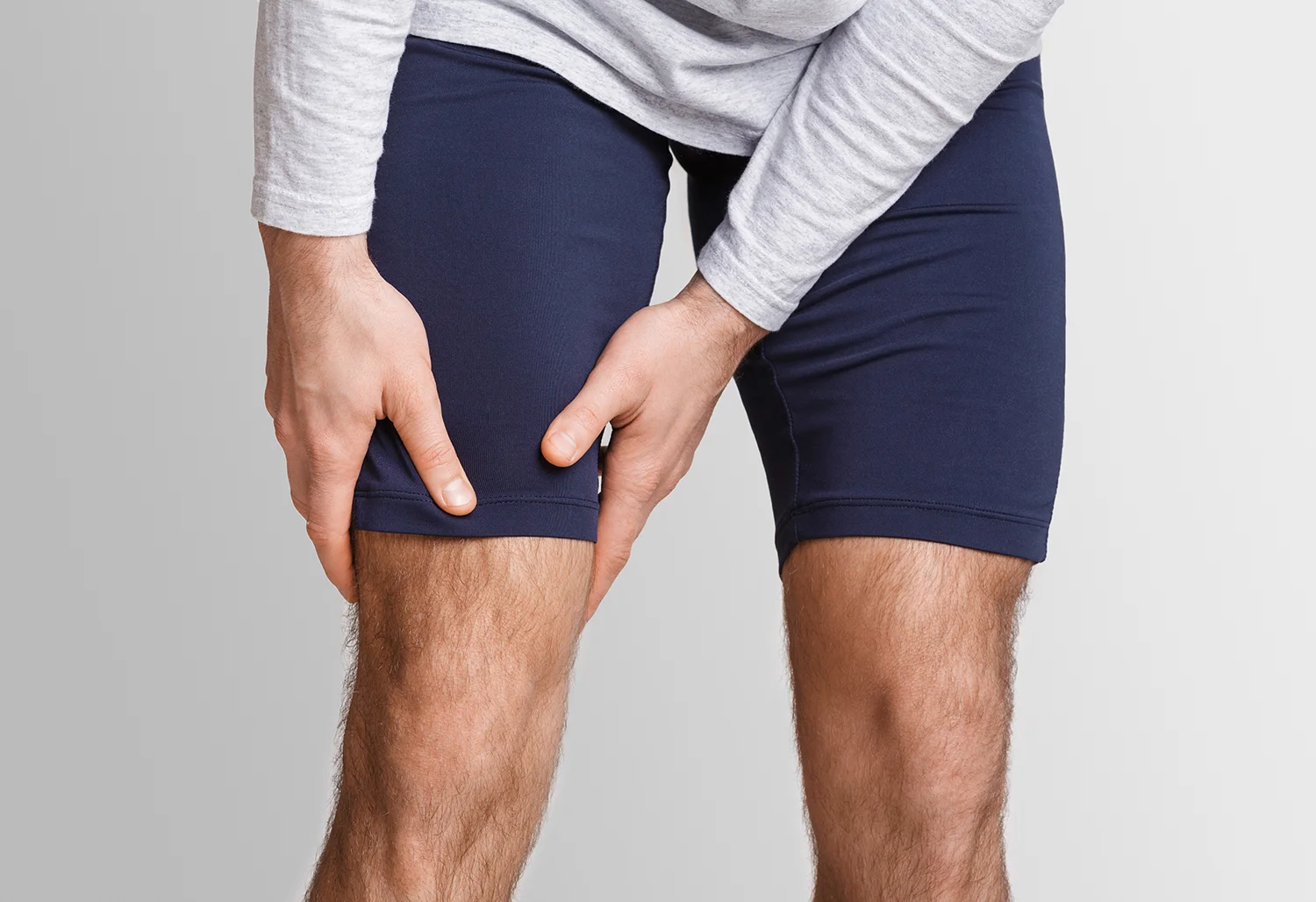
Proximal Hamstring Tendinopathy: A Separate Condition
Proximal hamstring tendinopathy is frequently confused with an acute hamstring strain. Key distinguishing features include:
- Deep ache localised to the sit bone (ischial tuberosity)
- Pain aggravated by prolonged sitting on hard surfaces
- Discomfort with uphill running, lunging, or sustained hip flexion
- Gradual onset linked to a sudden increase in training load
PHT requires a specific loading programme that avoids sustained hip flexion in the early stages. Ultrasound assessment confirms the diagnosis and guides the appropriate rehabilitation approach.
Related Conditions
Hamstring injuries frequently coexist with groin and lower back problems. If you are also experiencing inner thigh or groin pain, our groin and adductor pain page explains how to differentiate and treat adductor involvement. For athletes with knee pain alongside hamstring symptoms, see our knee pain and patellar tendinopathy page. Where lower back pain is also present, our back pain page outlines how spinal and hip function interact.
Book an Appointment
Do not let a hamstring injury become a long-term problem. Get an accurate diagnosis and a data-driven recovery plan at Liverpool Central Physio.